


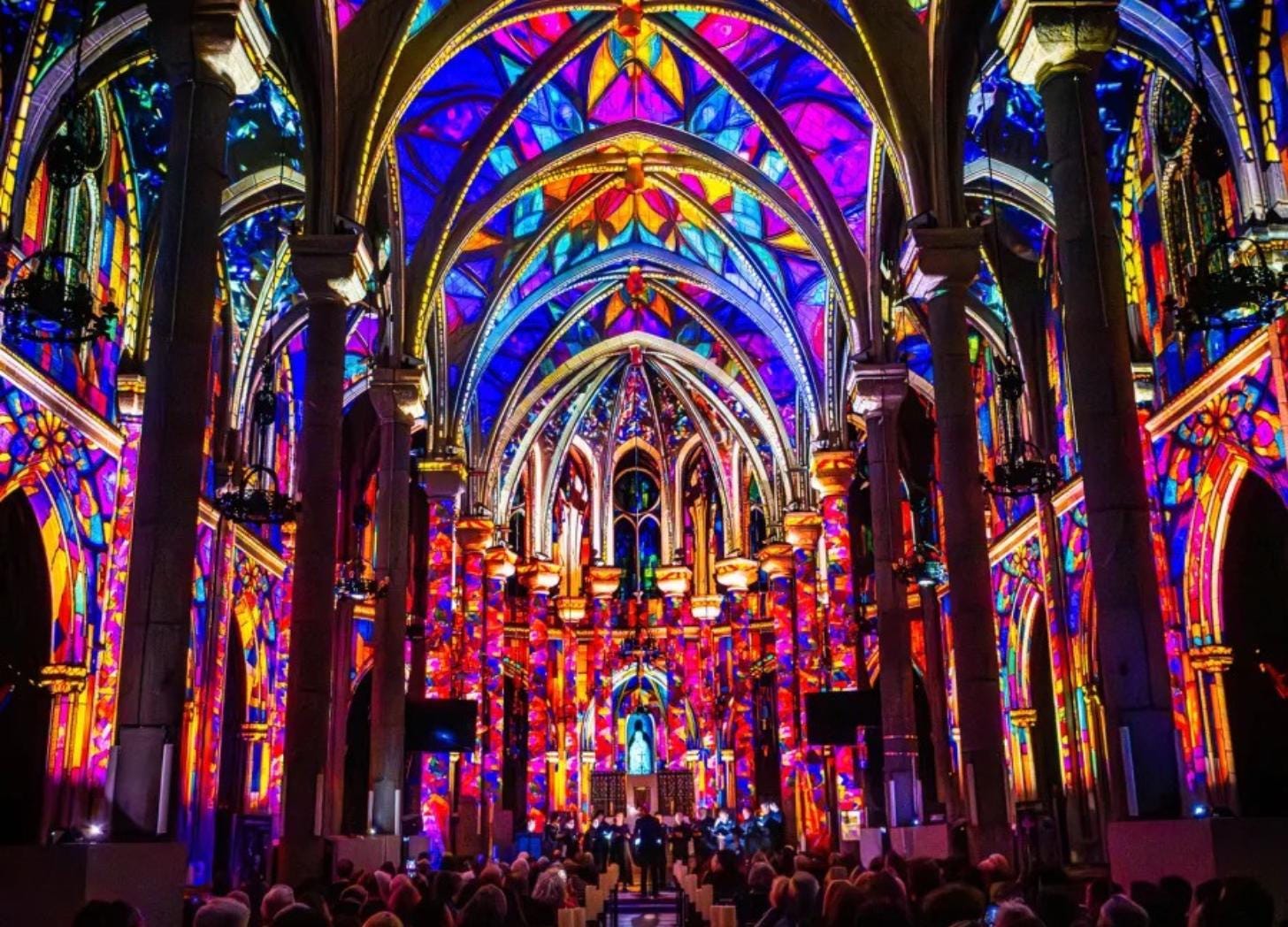
The best place to sit is in the back of the church. Closest to the center aisle. Someone told me that before my first Luminiscence show at the Basilica de Notre-Dame in Nice, and they were right. From back there, when the lights drop, the color comes down the whole length of the nave toward you, the kaleidoscope spreading across the vaults. I’ve queued up early every time to get my seat.
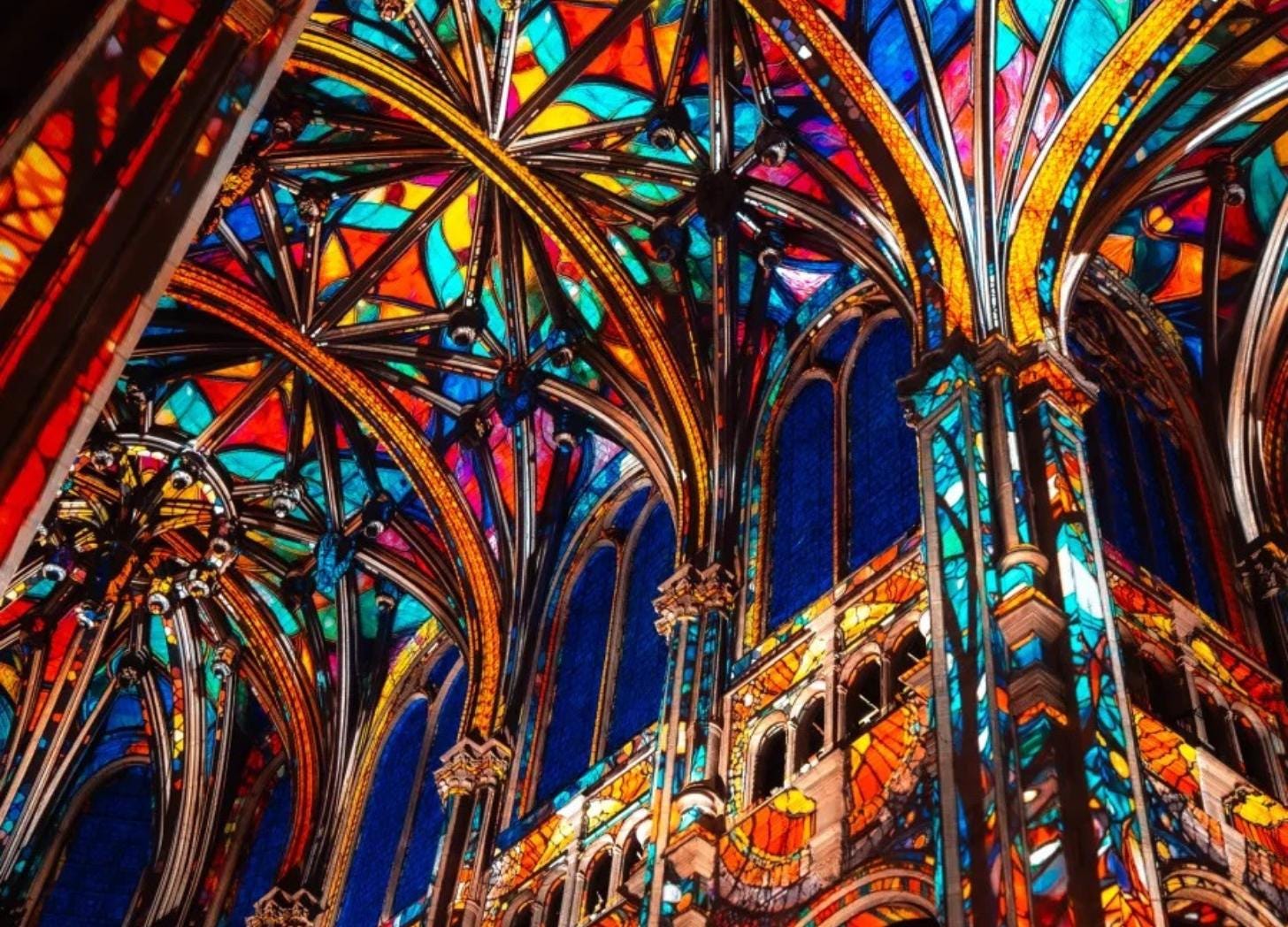
I love churches wherever I go. I like the history, the architecture, the hush of them. So the last time I sat there, watching it come apart in color, I thought: a building that usually only draws a crowd on Sunday mornings, full on a Thursday night. I meant it as a good thing. I’m still not sure it only is.
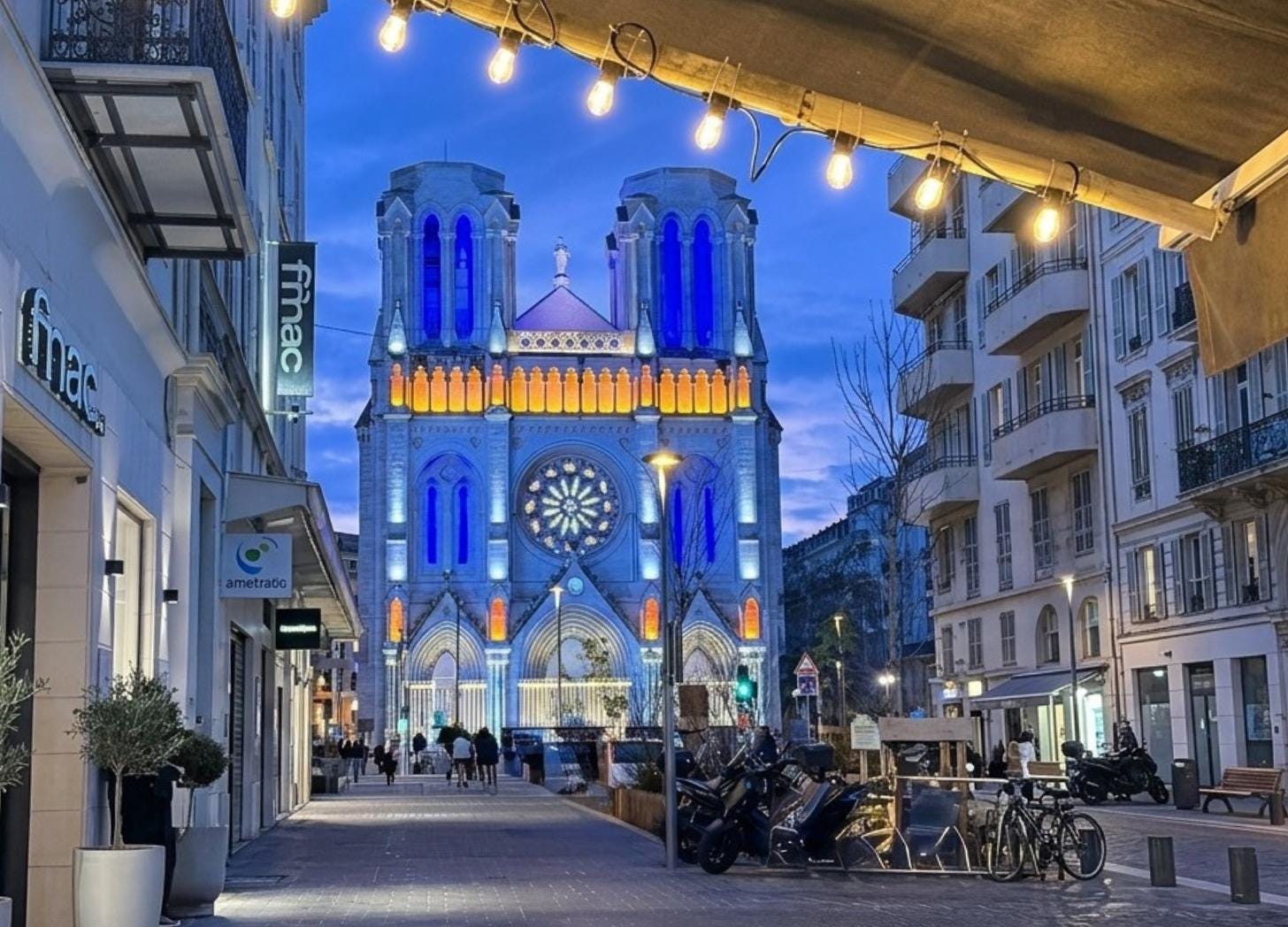
The Basilica de Notre Dame is the setting for a light show that runs three nights a week. On Fridays, you can hear it with a live choir; on other nights, it plays with digital music. I always choose the choir. To me, the difference is hardly worth arguing over, but the basilica feels more alive that way. I’ve seen three shows there, and each time the building became a stage.
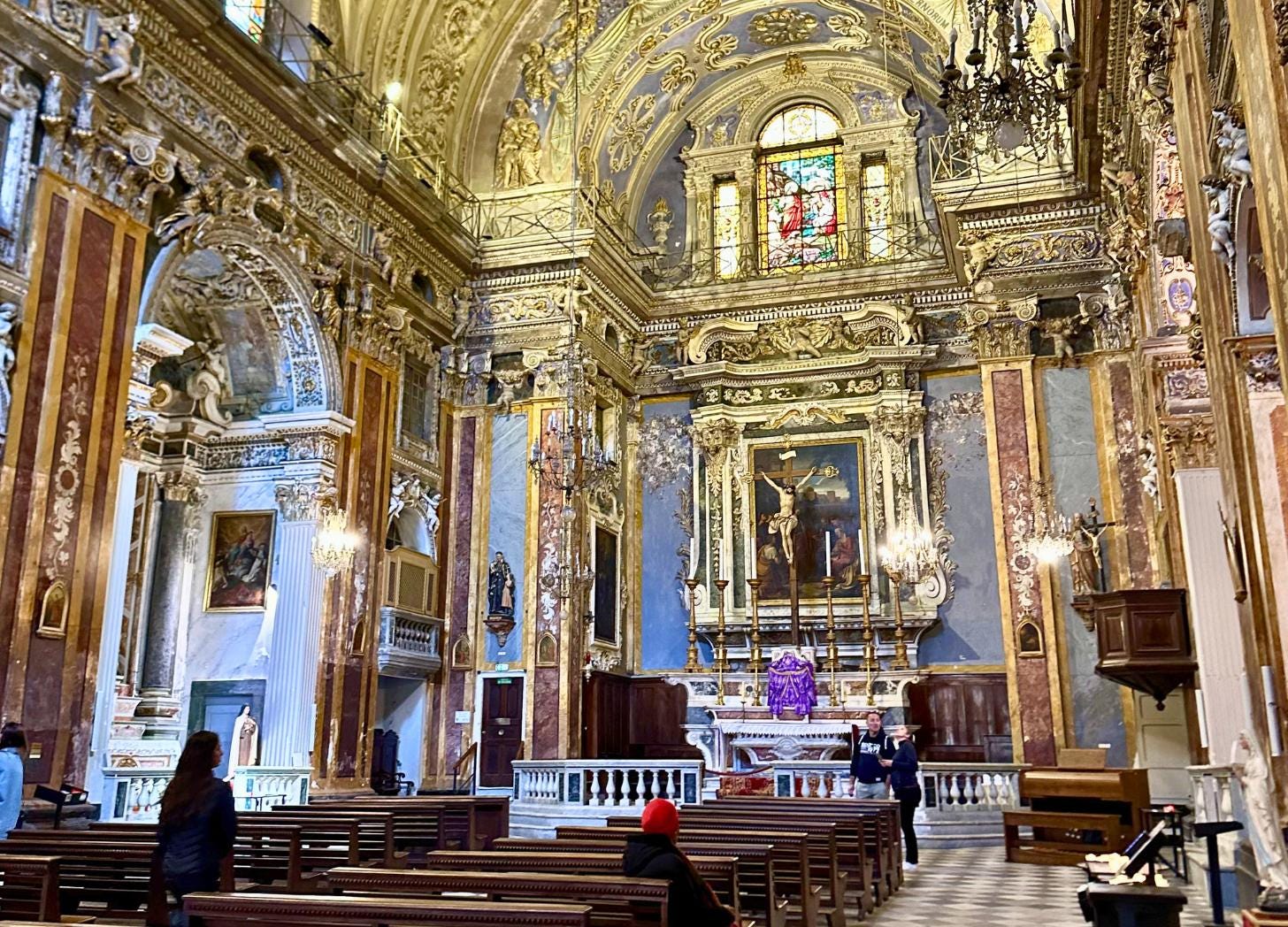
Old churches are mysterious places full of tradition and ritual. The gold leaf, the candles, the heavy silence. Some old reflex still wants me to genuflect. This was nothing like that.
Since 2023, it’s spread from cathedral to cathedral, Nice, Bordeaux, Paris, London, Philadelphia, São Paulo. Each show is made for that church. The narration, music, and projections fit its history and architecture. In Bordeaux, dozens of hidden projectors are calibrated to the stone itself. You can’t see the Nice show anywhere else; different building, different story. The old masons shaped these vaults over centuries. Now programmers are measuring them to the millimeter so the light can follow the same surfaces. Maybe that’s not desecration. Maybe it’s just a modern spin on ancient architecture.
The experience is more than the arches and saints. It’s the building’s history, the music, and the light across the ceiling. You see angels and clouds like the Sistine Chapel, then the Milky Way, then an arboretum where raindrops hit the glass.
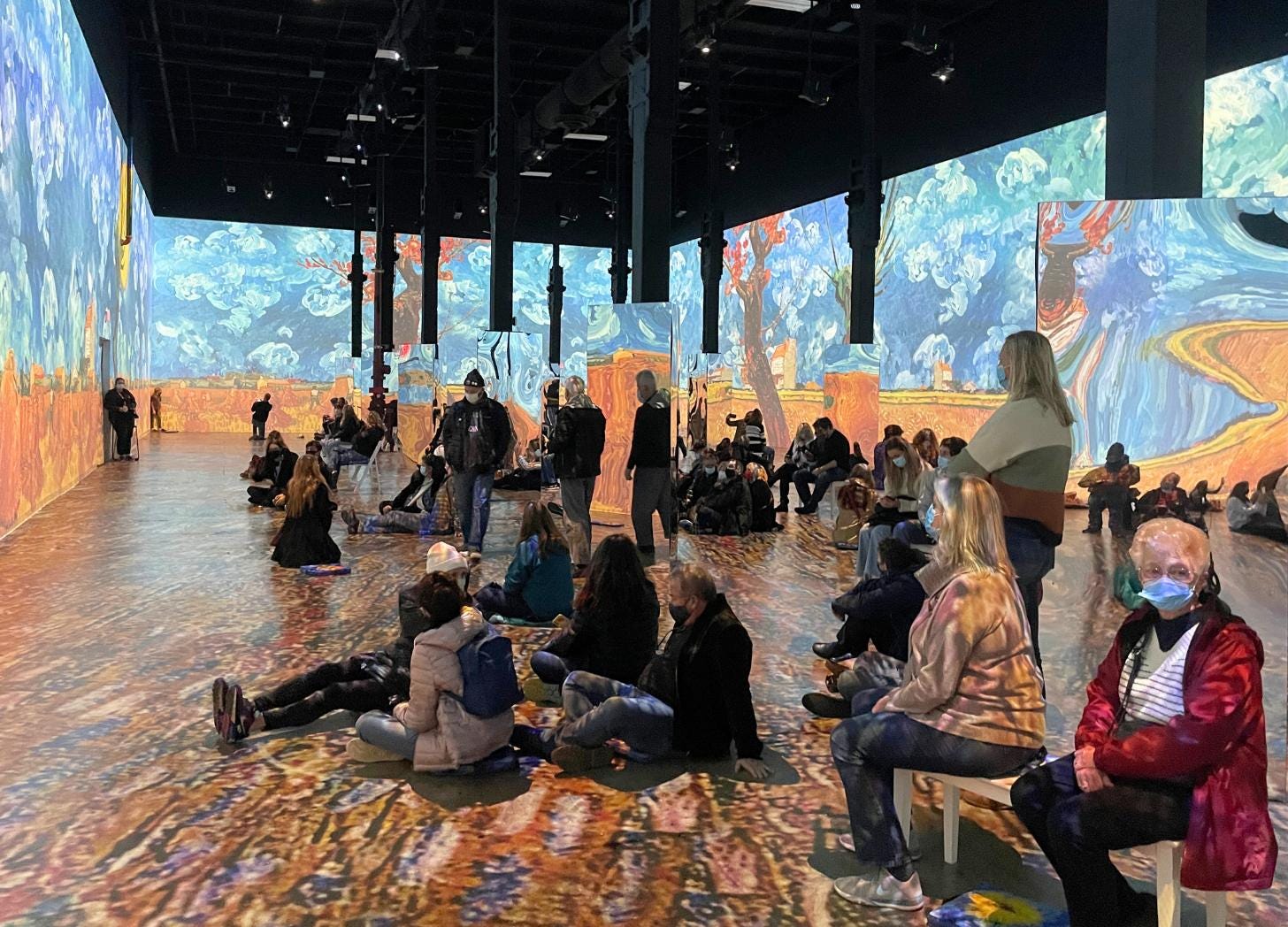
Compare it to the Rembrandt and Van Gogh immersive shows. Warehouse or simple box style rooms. No soul to sell. Impressive in their own right, the experience is different. It is sight and sound but without the depth of marred history, mystery, architecture, and reverence. The space itself was not sacrificed for the show.
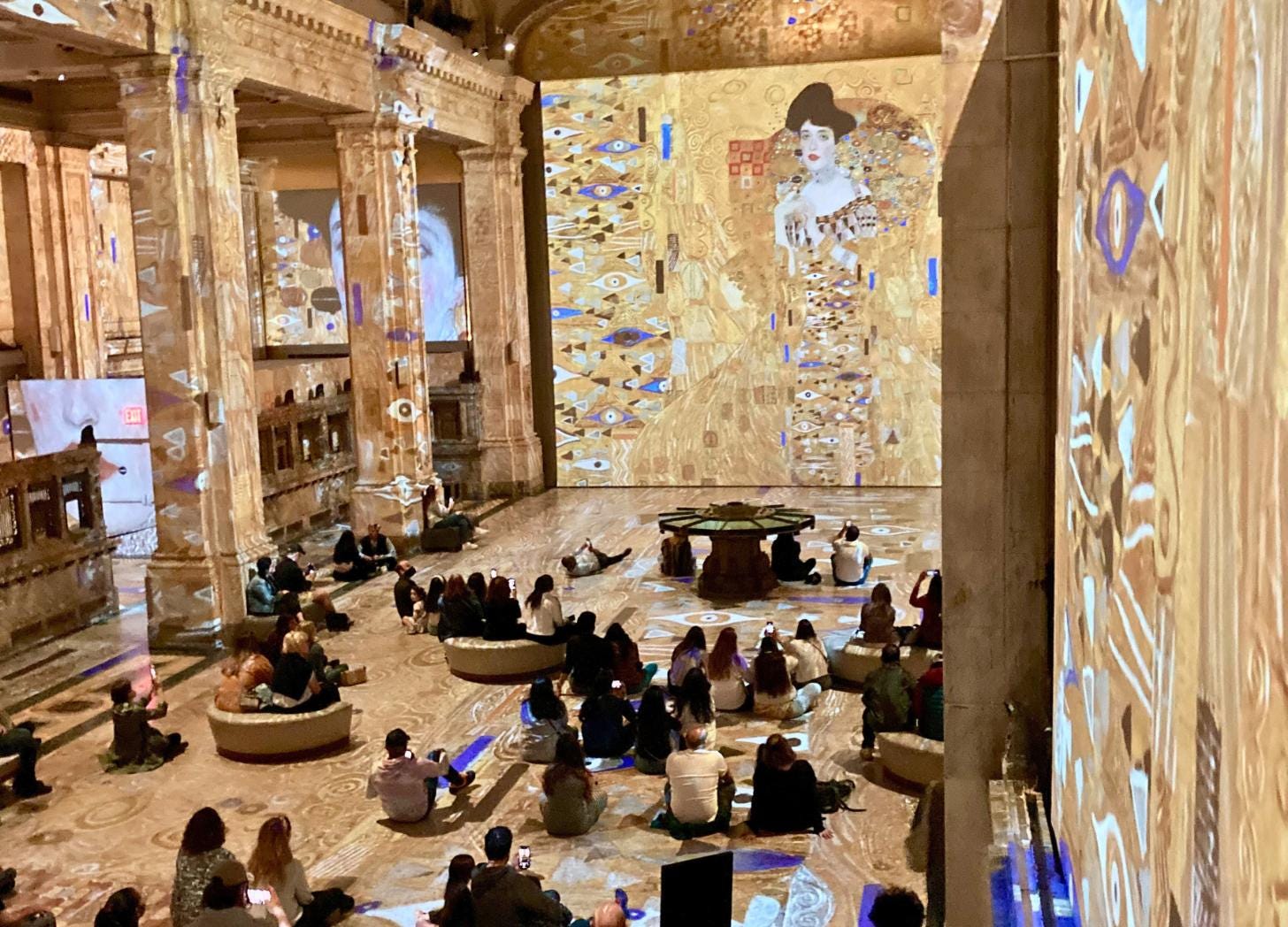
Hall des Lumières in Manhattan is more of a middle ground between warehouse immersive art and the cathedrals. A former Beaux-Arts bank (the old Emigrant Savings Bank) built around 1909 is a temple of money reborn as a temple of art. The light show is still impressive, and with the building’s unique H design allows you to move about the room, different vantage points, alcoves, and cavernous ceilings.
The place that is not only a projection screen but the subject is the Basilica de Notre Dame, and the other churches. Still consecrated, still holds Mass, and the show often tells the basilica’s own story across its own vaults. The building is a living shrine of sorts. Alive because of its parishioners. What’s left of them, anyway.
Empty pews, the cost of keeping these buildings standing, tourism is survival. Cologne Cathedral now charges admission, money earmarked for the roof. The light show isn’t sacrilege, so much as a lifeline. In France, only about 2% of Catholics attend Mass every Sunday, and just 7–8% practice regularly. Otherwise its crickets, with the occasional visitor lighting a candle, or kneeling in worship. The collection plate can only do so much.
Where Istanbul Draws the Line
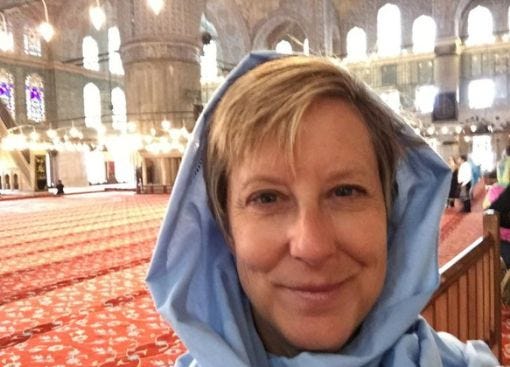
I took off my shoes, the borrowed scarf slipping, and stood at the back of the Blue Mosque while prayer kept moving up front. You feel right away it is still a working mosque. People coming and going, a rhythm you don’t want to be the one to break. So the light show, when they run it, stays outside. They throw it on the walls after dark and everyone watches from the square.
Across the plaza, Hagia Sophia has been everything. Cathedral, mosque, museum, mosque again. The layers are all still in there. But it prays again now, and you don’t run a spectacle through a room full of people on their knees.
Here they keep the show on the outside walls. The buildings that let it inside are the ones where almost no one kneels anymore. Like Nice.
What the lightshow does not buy, and what the Church keeps hoping it will, is faith. The pitch, especially in the American cathedrals, is that the awe is a doorway, get them in for the spectacle and maybe some of them stay for the God. Come for the lights, stay for the rest. Maybe. I’ve never seen anyone count the person who bought a ticket and came back for Mass. I didn’t.
In Paris, people have been ready to call in an exorcist over contemporary art in churches. Repeated traditionalist protest. Most recently as this month at an art installation in a Paris church during the Nuit Blanche festival. Despite the pushback, the show still went on.
They’re protesting a silent disco with drinks, an Eminem playlist, a provocative art installation. None of it has anything to do with the church it’s playing in. That’s what brings the petitions out. The light show is a different animal. It’s pulled from the church’s own history, built for that one room and useless anywhere else, which is maybe why nobody was protesting outside in Nice, at least not on the nights I was there. A disco just wants the walls. Luminescence wants the building.
What does the light show actually buy? All of this.
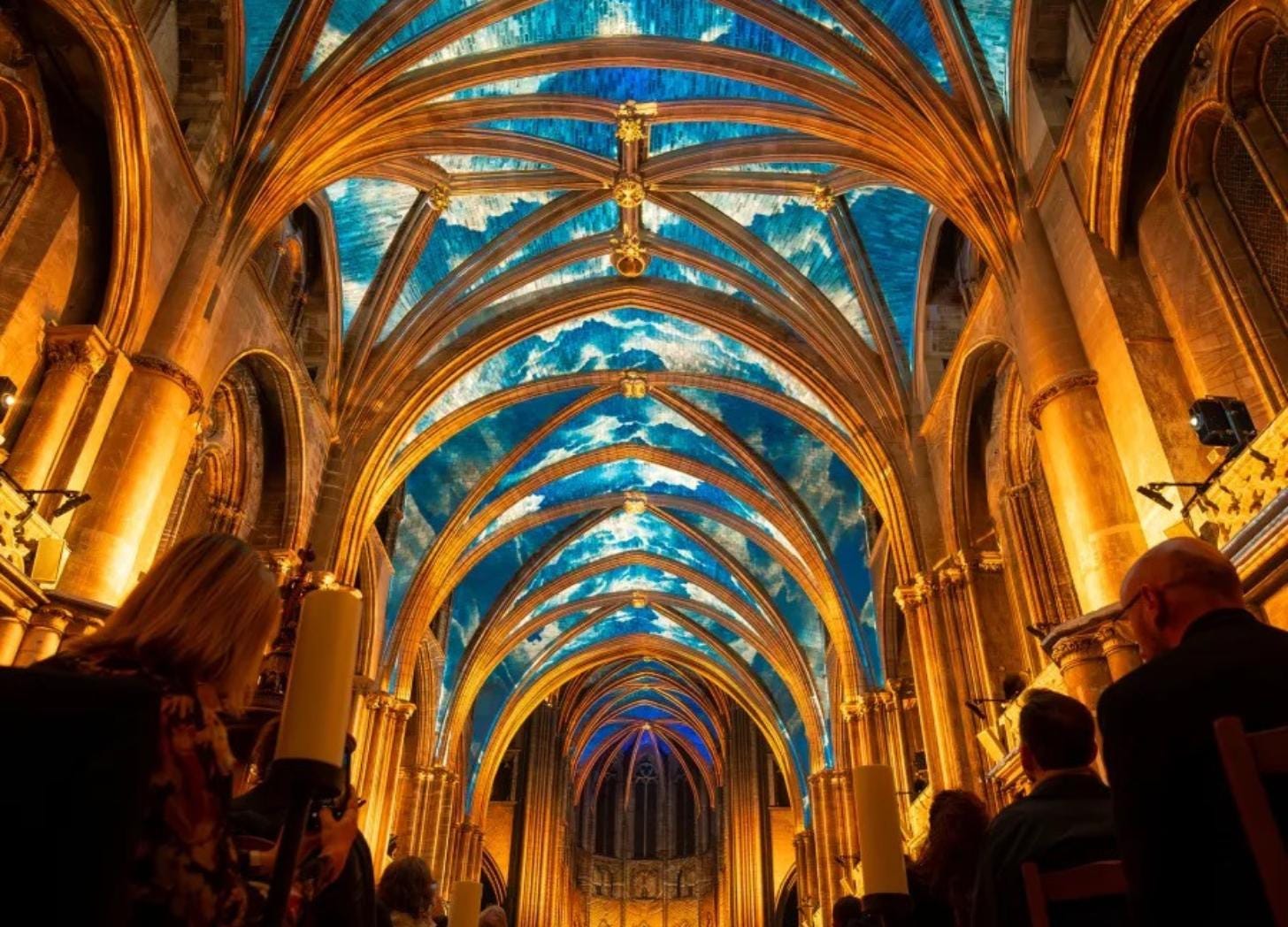
The answer starts with money, which the diocese is not talking about. These buildings are money pits. The roof, the stone, the heating bill in a room the size of a soccer pitch. The collection plate stopped covering that a long time ago. A show that sells out three nights a week gets closer than Sunday’s offerings do anymore. Some of the ticket money goes to a production company. This is a business, not a charity. A portion goes to the building’s own repairs, and the bigger money lands in the town. The people who come for the show fill the hotels and the restaurants and the trains. Looking at the numbers, they are boring in an accountant sort of way and staggering. England’s cathedrals put a couple hundred million into local economies in a year. That is what tourism is supposed to do. Benefit the people who live there.
Luminiscence and other similar shows have sold over 4 million tickets. You can have whatever feelings you want about that. The feelings don’t fix the roof.
I’ve stepped into churches throughout my travels. None were lit like this. This time I was inside, in the dark, looking nowhere else. Not taking in the statues, the crucifixes, not stopping to light a candle. The narration was in French. I don’t speak French, but I followed the story anyway, through color, light and sound. I kept going back, and I brought someone new each time. There was always something I had missed before. The building felt larger the longer I sat there.
Which leaves me about where I started. Back of the church, on the inside aisle, on a stranger’s tip, waiting for it to go dark. A building that sat empty six days out of seven, now full and paying for its own roof. I know some people would call that a step too far. Me, I think it’s a blessing.
What are your thoughts as to churches becoming an attraction beyond religion?
For saints, sinners, and the just plain curious.
Answered prayers, the logistical kind.
Q: What is Luminiscence?
A: An immersive light-and-sound show projected inside historic cathedrals. It combines 360-degree video mapping with music, sometimes a live choir, to tell the story of the building. It’s produced by the French company LOTCHI, now part of Banijay Live.
Q: Where can I see Luminiscence shows?
A: The show tours cathedrals across Europe and beyond. Past and current cities include Nice, Bordeaux, Paris, Strasbourg, Reims, London, Brussels, Philadelphia, Minneapolis, and São Paulo. Locations rotate, so check the official site for what’s running now.
Q: Where can I buy tickets?
A: Through the official site, luminiscence.com, and ticketing platforms like Fever, Tiqets, and GetYourGuide.
Q: How much do tickets cost?
A: In Nice, prices start around 12 euros. Pricing varies by city and seating.
Q: How long is the show?
A: About 45 to 50 minutes.
Q: When does it run?
A: In Nice, three nights a week, typically Thursday through Saturday, with two showings a night. Schedules differ by city.
Q: Is it suitable for children?
A: Yes. In Nice there’s no minimum age, and small children are welcome on a lap.
Q: What’s the best seat?
A: Toward the back, on the center aisle. That’s where the projections converge and the color runs the full length of the nave toward you.
Q: Are there other cathedral light shows besides Luminiscence?
A: Yes, and it’s spreading fast. AURA runs in Montréal and at Grace Cathedral in San Francisco. Luxmuralis tours cathedrals across the UK. Hall des Lumières in New York does the same idea inside a former bank. Luminiscence is the biggest name, not the only one.
Q: What is AURA?
A: An immersive light-and-sound experience created by Montréal studio Moment Factory. The original runs inside Notre-Dame Basilica in Montréal, and a version plays at Grace Cathedral in San Francisco. It turns the architecture itself into the canvas, with orchestral music and projection mapping.
Q: What is Luxmuralis?
A: A British art collective, the artist Peter Walker and composer David Harper, that stages immersive light-and-sound shows inside cathedrals. It tours UK cathedrals and has appeared at Washington National Cathedral in the US, with themed installations like Space, Life, and Time.
Q: Is it disrespectful to hold a light show in a church?
A: Depends who you ask. The shows run outside of Mass, tell the building’s own story, and rarely draw protest. The objections tend to land on silent discos and Eminem playlists, not on a show pulled from the church’s own history. After three visits, my take: a full church beats an empty one. Yours may differ.
And if light and sound shows at a cathedral have you grabbing your rosary tighter, here is a video of a now famous Catholic priest DJ’s techno music. If you watch this, you may want to go to confession.
An unlikely place to find a world record holder

Friday I went to Gorges du Verdon. Europe’s version of the Grand Canyon, although not as wide. I didn’t google it. Just a point on a map. No plan. The canyon does what canyons do. It makes you feel small. Apparently there is rafting on the river. I cannot imagine how minuscule people in a raft feel with rock walls scaling around them.
@Masao Ichioka thank you for the restack!
I too am a fan of churches. I tried to enjoy one of those immersive experiences and something was missing.