

Visitors Came for Goat's Milk As A Cure
Interlaken, Switzerland's earliest tourist resort, where wealthy Europeans drank goat's whey for breakfast in 1825

On the second floor of the Tourismuseum in Unterseen there is a display tracking the six-day hiking route Johann Wolfgang von Goethe took through the Bernese Oberland in 1779. They had his dates, his route, and even journal entries. I stood there a while, reading it all.
Switzerland was not on my list. My sister wanted to go. Once there, I was fascinated to learn about how long Interlaken has hosted guests and tourism. I have lived in or near tourism towns most of my life, and some in the mountain regions, but it never occurred to me that Interlaken was one of the first destinations to embrace Alpine tourism. Alpine tourism didn’t start with ski lifts or snowboards. For a long time, people saw the Alps as something to cross, not somewhere to vacation.
Places like Interlaken, Grindelwald, and Lauterbrunnen were attracting Romantic-era travelers and artists. They came for the scenery. Really, it’s the cliffs, the waterfalls, and that almost unreal feeling you only get in the Alps.
Interlaken quickly became a place for wealthy visitors. People who’d come to “take the cure.” They’d stay for weeks, breathing the mountain air. Doctors back then prescribed goat’s whey for nerves, digestion, lung trouble, and just about every complaint blamed on city life. I learned that every morning before sunrise, local goat herders would hike down from the high pastures with wooden tubs of fresh, warm whey on their backs, so guests could have it at breakfast.
Local aristocrats staged the first festival at castle ruins outside town. Farmers performed stone-tossing, wrestling, and yodeling for European tourists. The start of Swiss cultural tourism. Traditions like yodeling are still part of the region’s folklore today.
Interlaken kept noticing what wealthy travelers would pay for, then shaping the next version of the experience to sell them.
The Tourismuseum is the only museum in Switzerland dedicated to the history of tourism. It’s in a clergy house built in 1640. Four floors full of history on the souvenir trade, transport, mountaineering, and hospitality. The displays go back to the 1770s. They show how locals decided what to protect (the landscape, the view, traditional practices) and what to sell to tourists (experiences, transport, hospitality, souvenirs).
The Höhematte Meadow is the best example. In the 1860s the Belle Époque, a period of prosperity and cultural growth was hitting Interlaken. Grand hotels going up.
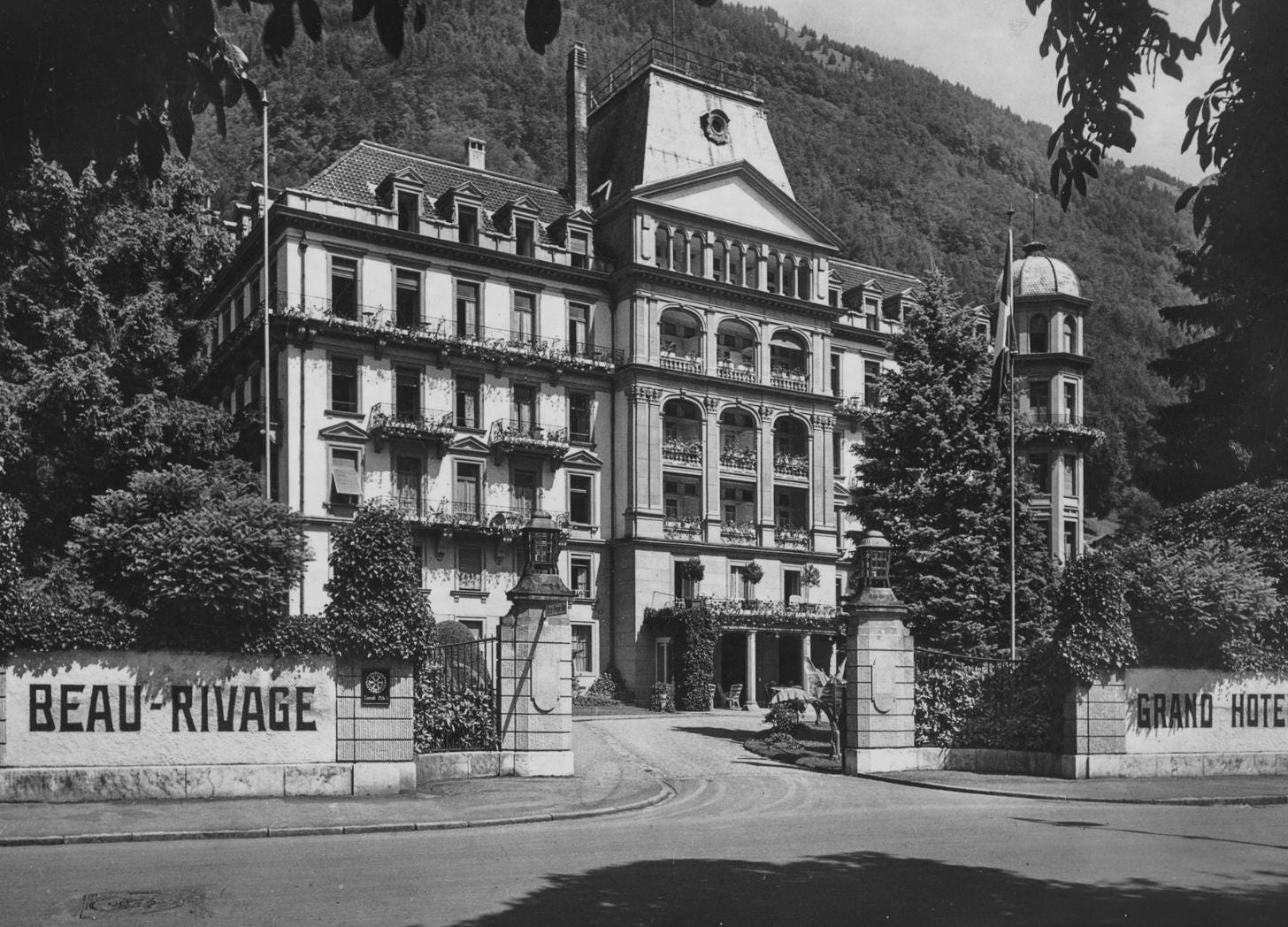
The Grand Beau-Rivage opened in 1874. Steamships across Lake Thun and Lake Brienz. Speculators eyeing the unobstructed view of the Jungfrau, the most valuable open ground in the valley, for a hotel and casino zone.
Thirty-seven local landowners, farmers and local hoteliers watched developers circling the meadow. As a co-op they purchased the land. Nothing shall ever be built on the Höhematte, and the view of the mountains shall be preserved forever.
They understood the view was worth more empty than full of buildings.
The view is what people come for.
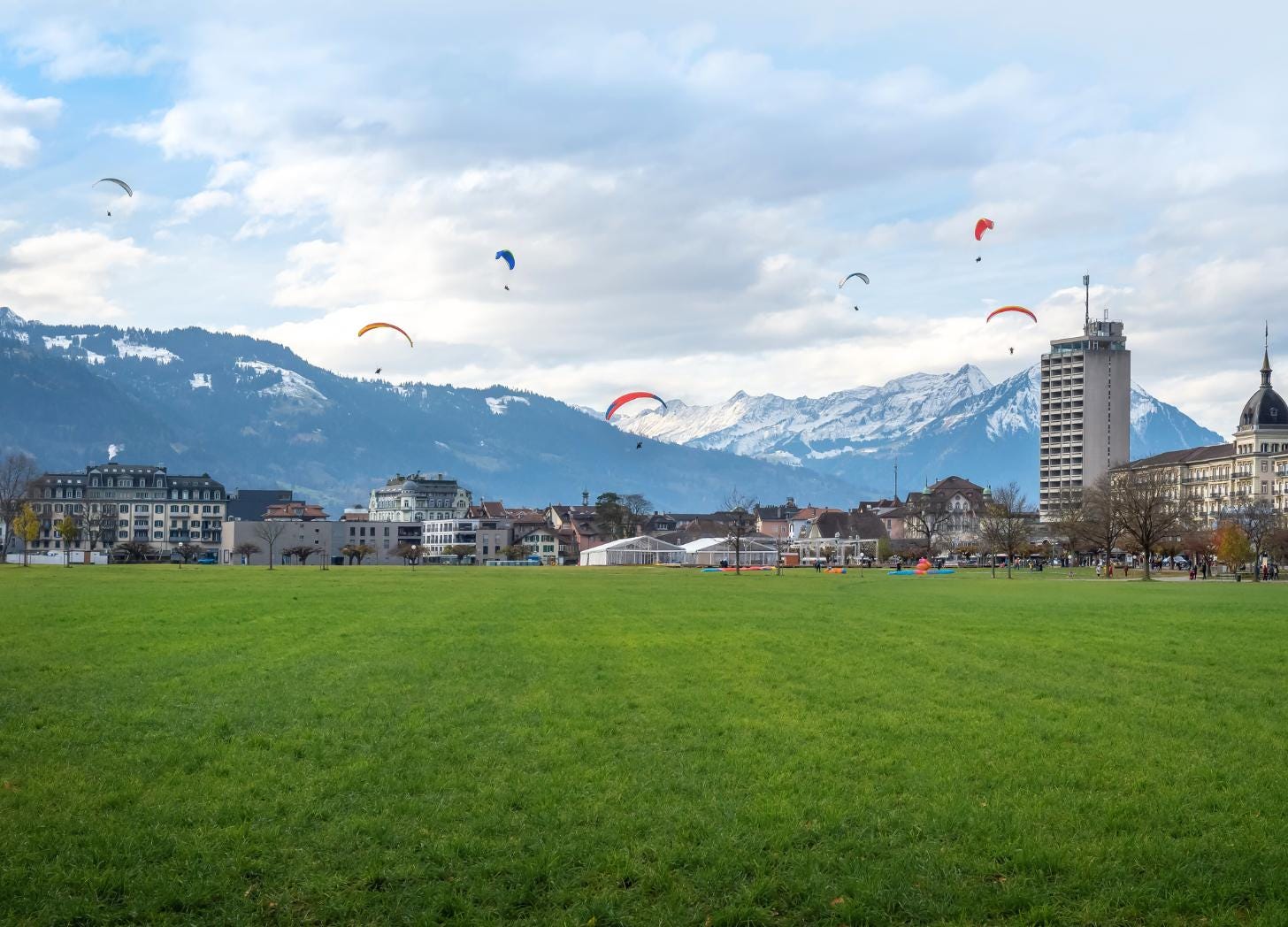
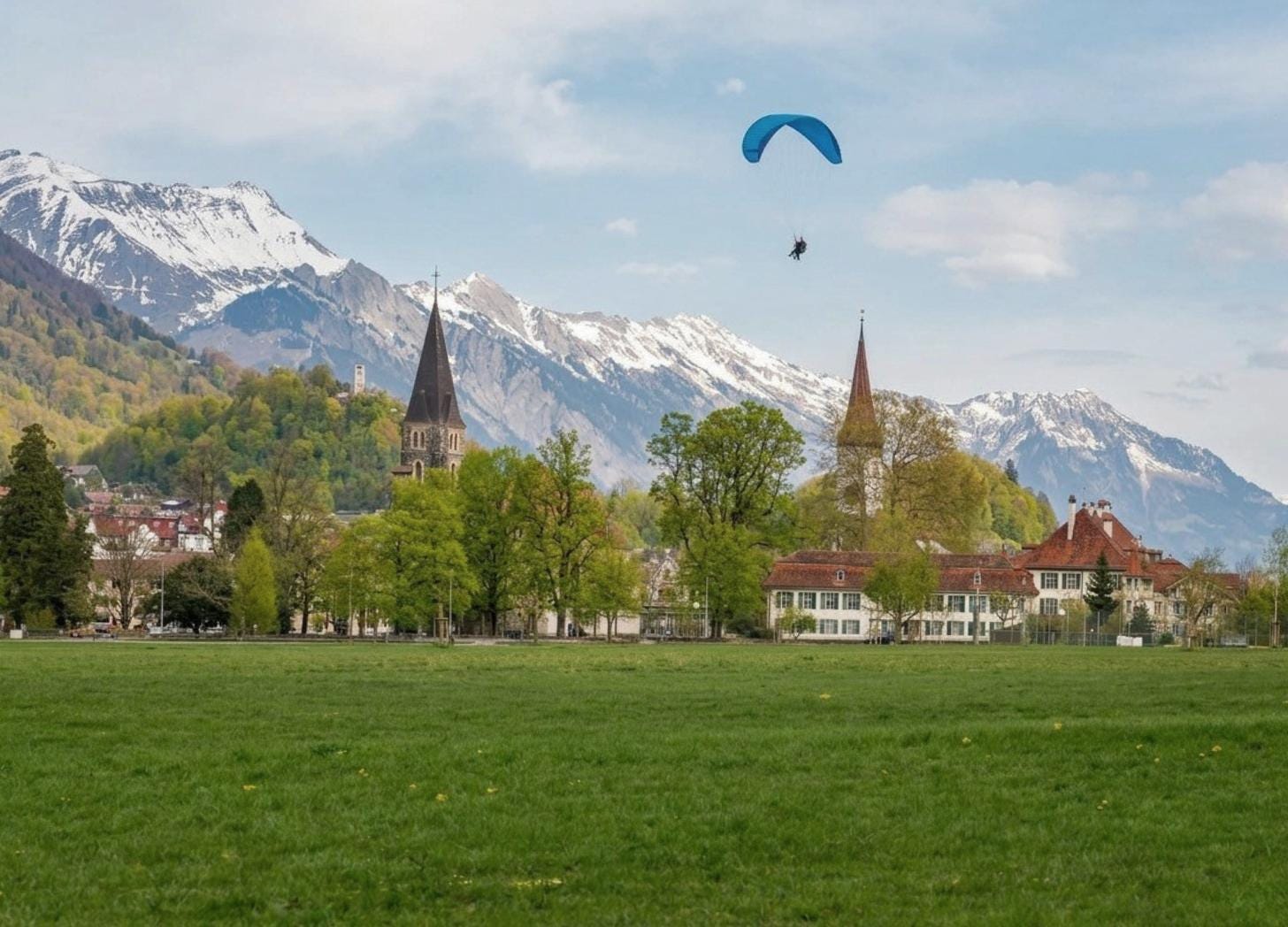
You can stand on the Höhematte now and look at the same mountain the British aristocrats saw in 1850. The view is not luck. It is a 160-year-old civic agreement. The farmers then could not have pictured what the meadow gets used for now. Paragliders. Lots of them. They launch off the cliffs above town in colored canopies and float down to the same field the speculators wanted to pave. The pact stands. The view stays. The field still belongs to everyone.
It’s deliberate.
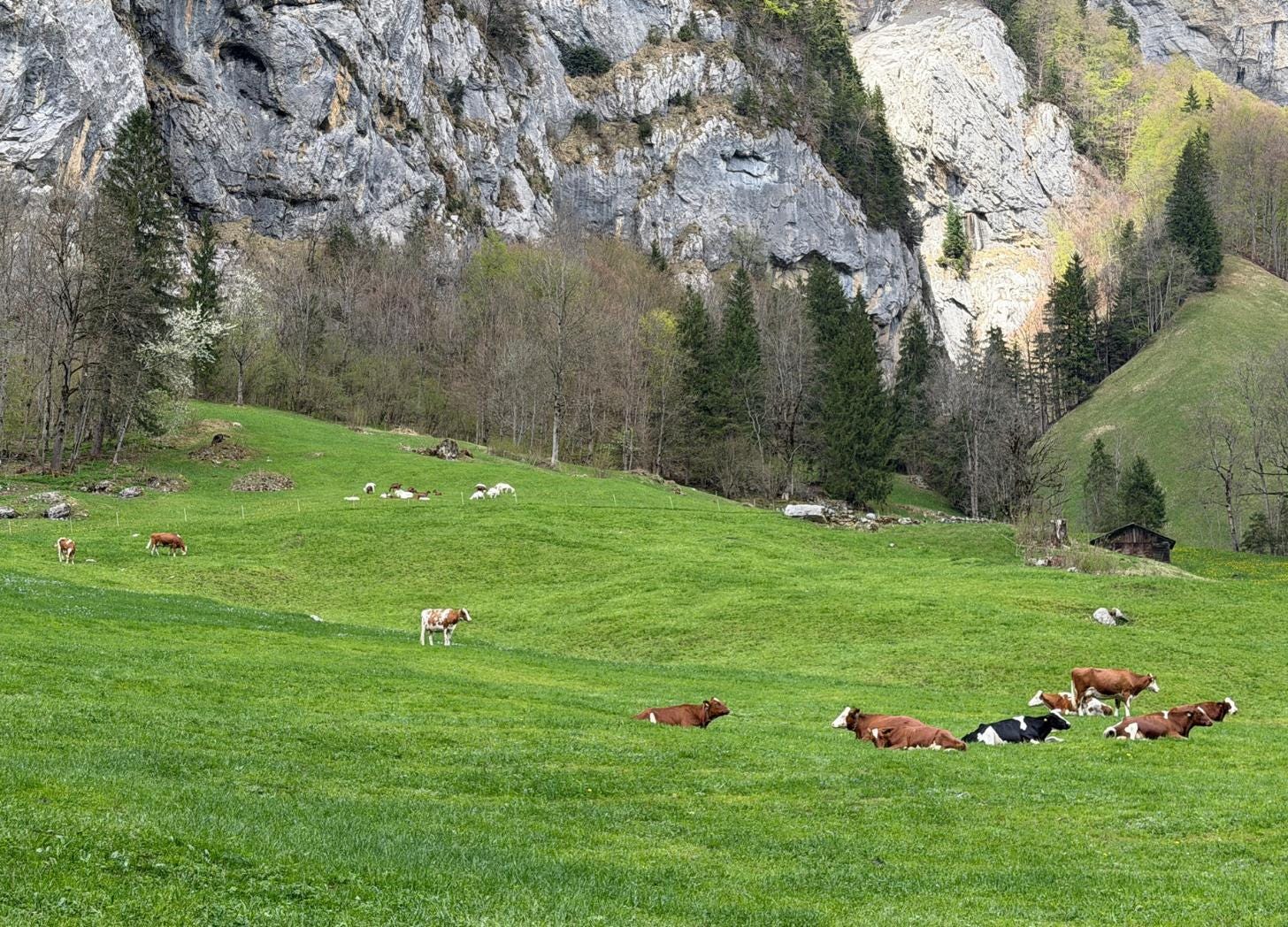
Even the cows in the valleys are intentional. The country pays the farmers to keep them there. You hear the bells from across a field, ringing as the cows shift their feet. The bells are how the farmer knows where the cows are. The country decided a long time ago that what tourists were paying to see had to be real.
Protecting the view was one decision. Made it once, and it's held for 160 years. Keeping a town livable is the opposite kind of problem. There is no pact you sign and walk away from. It is a fight that resets every year, up against the same money that never really goes away.
I am not going to pretend Interlaken has solved the problems of tourism. It hasn’t. In the Lauterbrunnen valley buses run between the villages all day, every day, full of visitors on their way somewhere. The village priest, Markus Tschanz, told Swiss public broadcaster SRF that the people of Lauterbrunnen feel like employees in an amusement park. Even the carpenter, he said, has become a tourist employee. They cannot escape it, because they live there. I worked in an amusement park for years. He’s right.
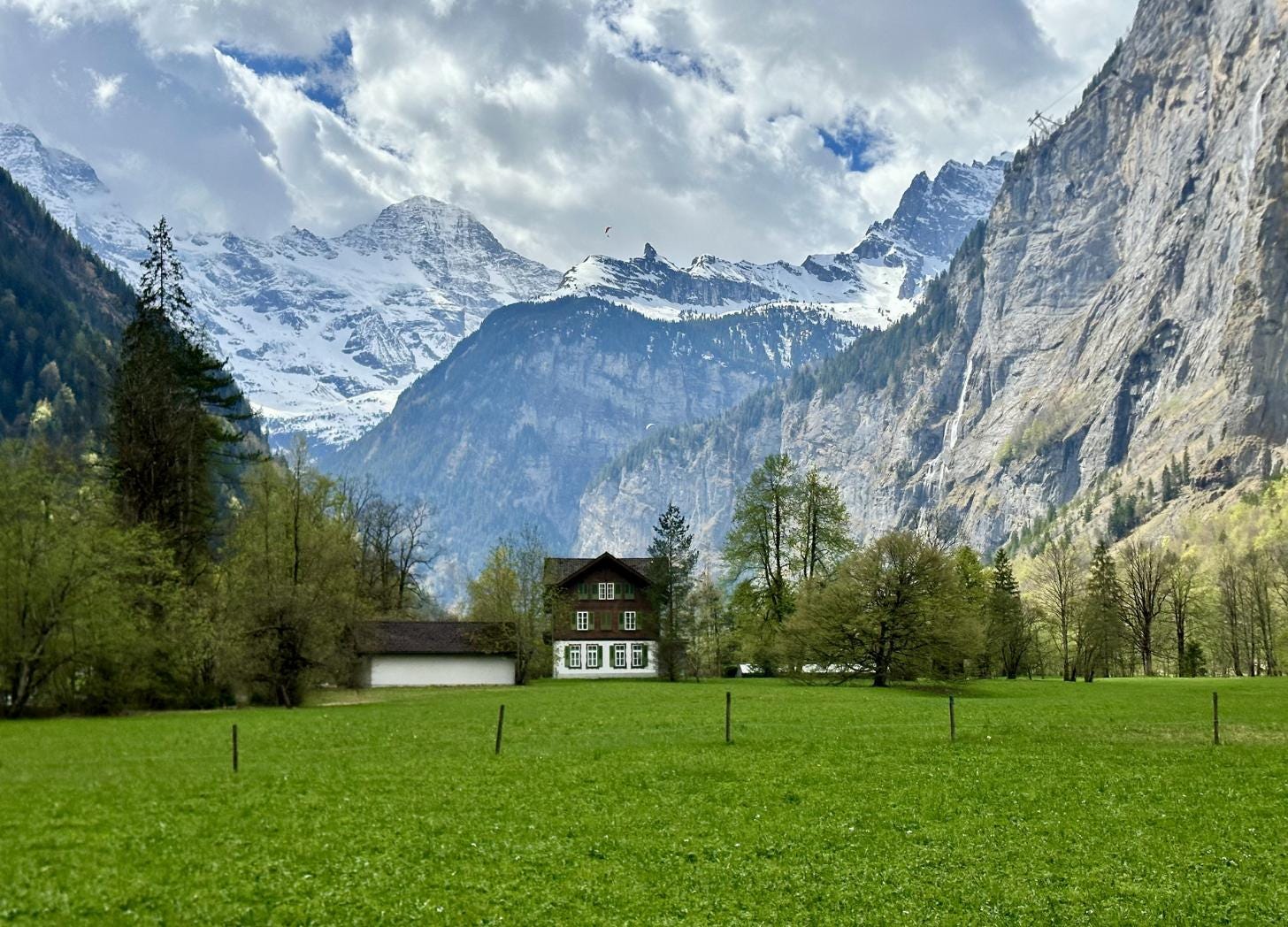
I walked along the Lauterbrunnen valley trail JRR Tolkien walked at 19 years old. The trails in the valley felt close to sacred, mystical. Or maybe that was just me. Every so often a small sign asked visitors to keep their voices low, mind their dog, and to tread carefully. People did. I also found the modern day farm stands along the path.
Self-service cabinets sit at the end of farmer’s driveways in the Lauterbrunnen valley. Wooden, on legs, with glass-front refrigerators inside. Inside the fridge are wedges of cheese with handwritten paper labels, fresh veg, dried meats and jars of pickled things. A small painted cow on the side as the only signage.
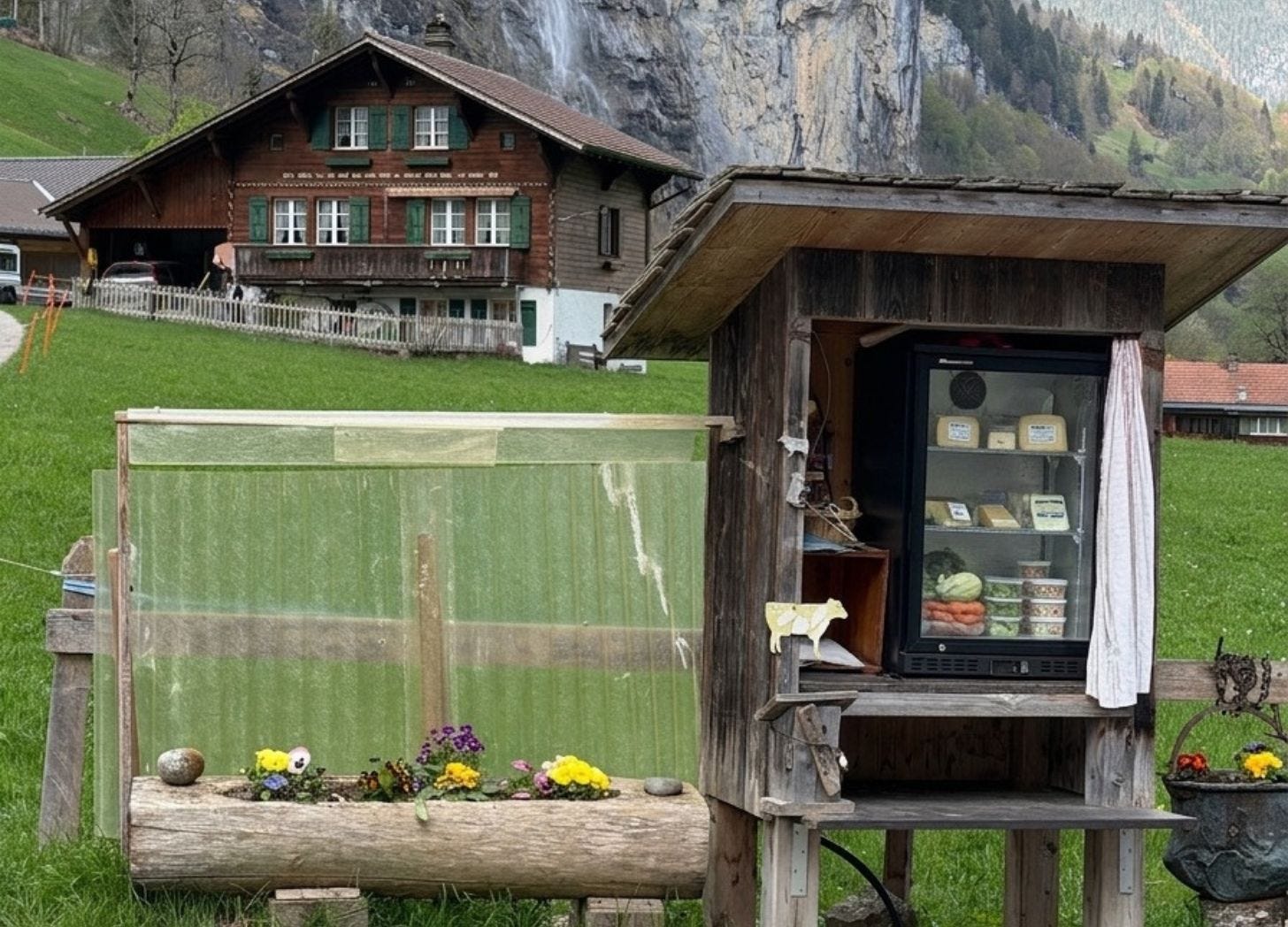
There is a coin slot, and I actually saw one with a credit card swipe. No farmer in sight.
You open the door. You take what you want. You pay. You keep walking.
I bought cheese and meat sticks from no one, twice that week.
My friend Kashi lives in Interlaken. We worked together in Mexico thirty years ago. She runs vacation rentals here. We talked about the challenges of rentals and Airbnb, plus the community and similar stories I’ve heard from owners and managers wherever I’ve gone.
We talked about the town. Kashi told me that even kindergarteners are taught to walk to school on their own. The kids take the train alone. Her two boys have been riding up to the ski mountains by themselves since they were eight, putting their gear on at the platform, spending the day skiing, then coming home.
In a place that has been hosting strangers for 250 years, they have still built for their own kids, not just for the people with cameras. You see it in small things. An unwatched cheese fridge. The fact that Kashi didn’t even know there were Interlaken police.
This isn’t tourism done well. It’s what’s at stake.
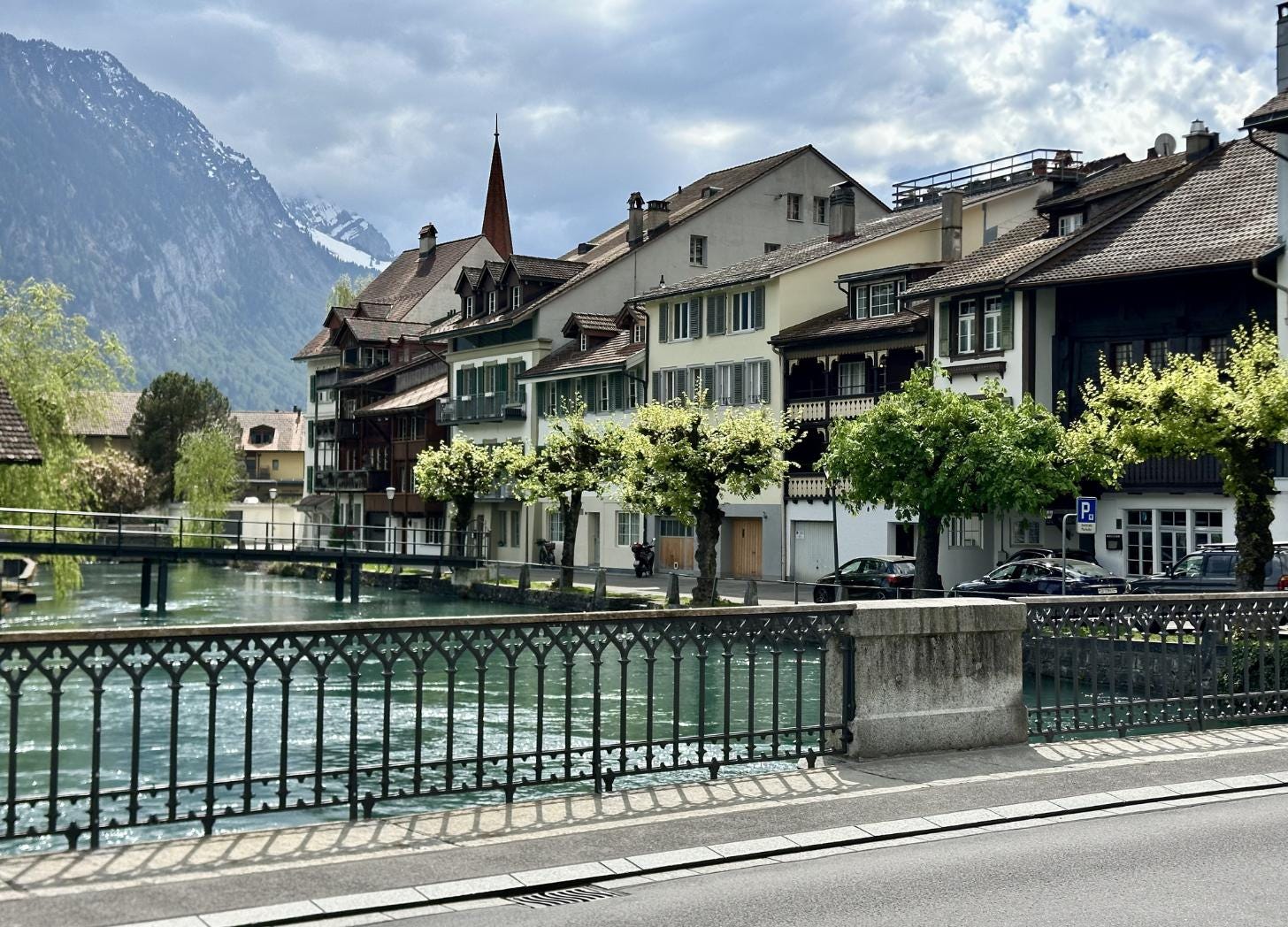
During the years Kashi has been building her rental business, Interlaken has seen second homes rise by nearly 30%. The town also enacted a two-year building freeze while a group figures out how to slow the conversion of homes into rentals. The Lauterbrunnen council has proposed a 5 to 10 franc entry fee on day-trippers, exempting anyone who books local lodging or arrives by train. April is one of the months the tourism boards have been steering visitors toward, to take some of the July-August pressure off.
We came at the right time by accident.
Interlaken has had 250 years to figure this out. It still hasn't. Most places don't get that long.
@PEB thank you for the restack!
Amazing that tourism goes back so far. And so interesting that the Swiss figured it out -- down to "Even the cows in the valleys are intentional." And it all works. (like a Swiss clock).