


Out of a swarm of people with the sun beginning to rise, I stepped onto a bus with a partially shattered windshield. A guy riding shotgun with a shotgun.
It was 2010. I was a long way from Mexico. My friend Kelly had lived in Akumal, my pueblo on the Mexican Caribbean coast. Animal welfare was her thing. She organized spay-and-neuter clinics. The kind of woman who was not afraid to get dirt under her fingernails. Down-to-earth, hardworking, gritty. She invited me to join her on a Humane Society International project to Tanzania, “dog and donkey clinics” in the bush. Without a second thought I said “yes, but no buses.” Kelly explained we would have handlers and a driver to escort us.
The trip began in Arusha, Tanzania, just south of the Kenya border and home to Mt. Kilimanjaro. I climbed it two years later. A tale for another time. Yohana from Tanzania Animal Protection Organization met us. Donkeys are the John Deere tractor of many people in Tanzania. Yet, farmers are notorious for putting oxen yokes on their donkeys, which causes injuries. Kelly’s job was to talk to the farmers about their burros, vaccinate dogs and sometimes a clinic turned into field triage.
Our driver Ernesto drove us west from Arusha. A well-educated, handsome guy. Doing side hustle guiding and driving while looking for a job. We were not on safari and did not need a guide. That was not to say we didn’t want to have some fun along the way. We took the road less traveled in our Land Rover. Out to Ngorongoro Crater for a glimpse of the Big Five. I read the crater was the place to see black rhinos. We saw huge tusked elephant bulls, lions like the cliche, lounging in trees, and herds of wildebeest and zebra. Lots of zebras. No black rhinos.
We were quite the traveling road show. Village to village. Questionable hotels and dorm rooms. Fried street food in the small cities, kebabs or coo-coo and chips, fried chicken and French fries. We avoided water and juices. Cokes or bottled beer. Less chance of a parasite that way.
I remember one day the only thing we had to eat was stale crackers and warm beer.
A few of the towns had a local bar. We went in the evening for a beer and a game of pool.
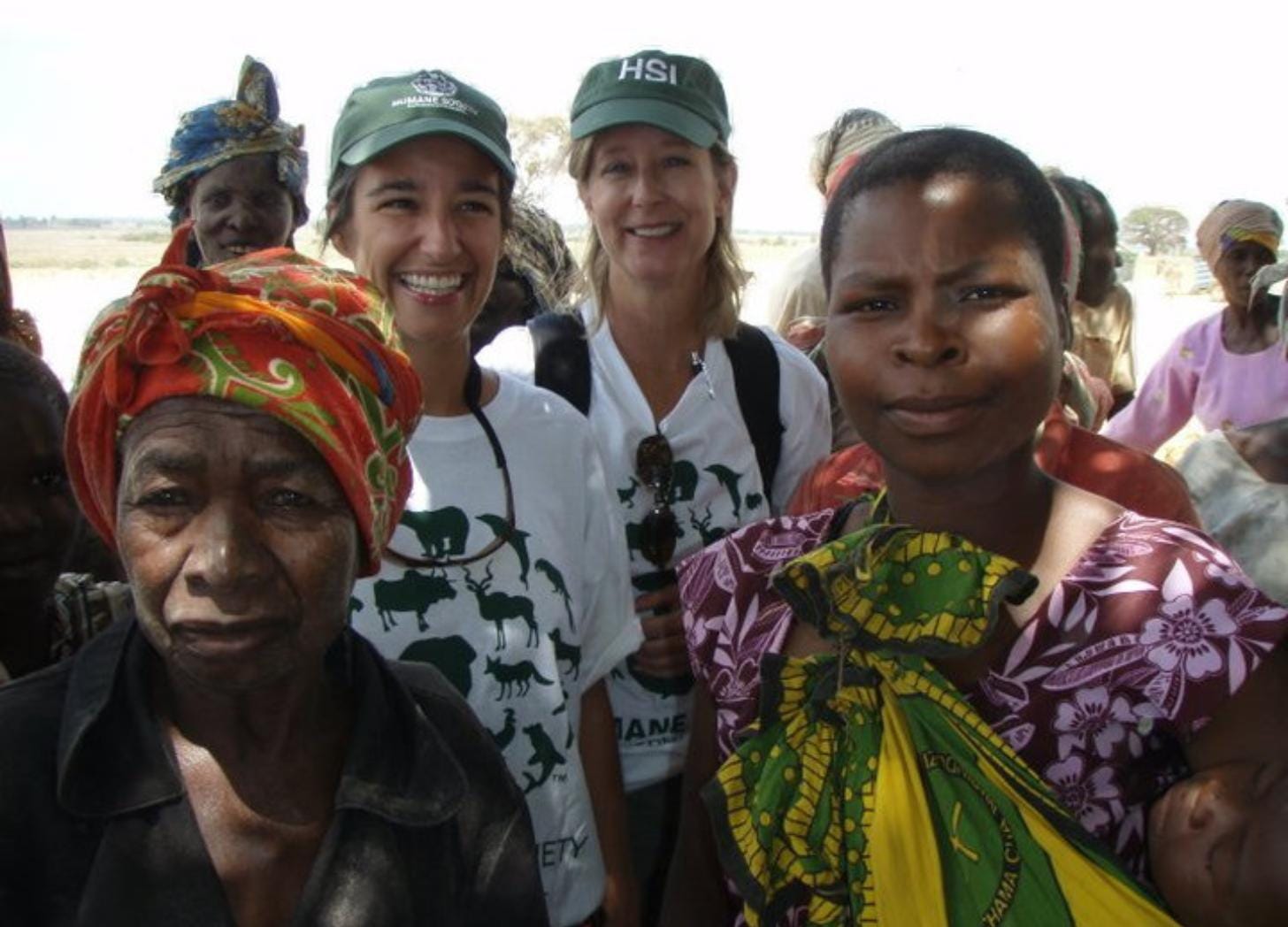
Across the road from a rice processing plant, women sifted discarded husks in a field for half grains of rice. Bagging the rice to take home. The women had a great laugh as they tried to teach the two muzungo (white people) Kelly and I to sift rice. We never got the hang of it. The husbands sat under a shade tree. Kelly went over and talked donkey yokes. From the field across from the rice mill, we were ushered into a beat up old car and on to the next town.
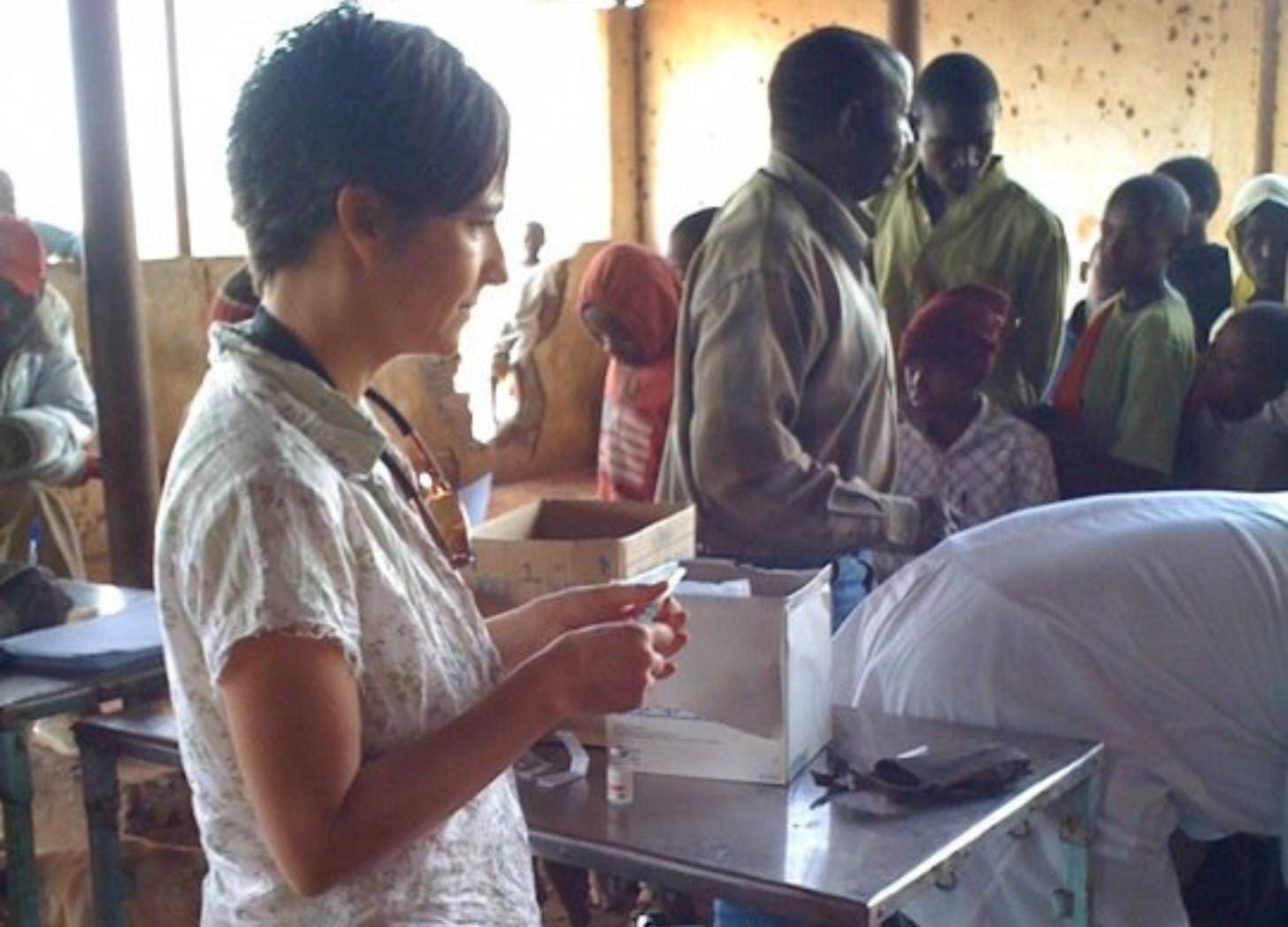
At the clinics I helped with rabies injections for the dogs. In an open-air metal barn the town queued up for vaccines. Grubby, skinny hounds were led by boys and men on lengths of rope.
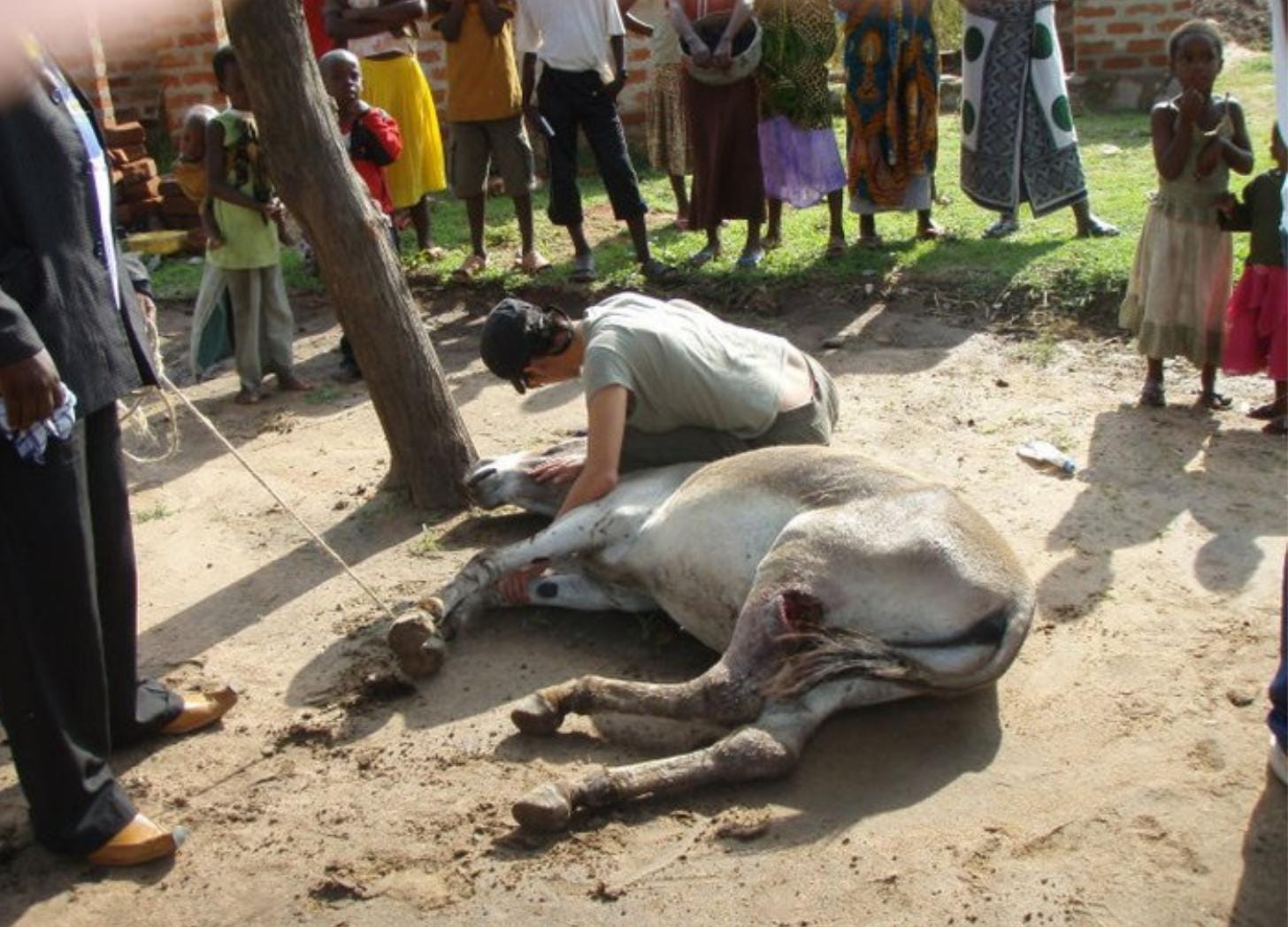
One stop became a donkey M*A*S*H episode.
A donkey’s back achilles tendon had been slashed with a machete by a pissed off neighbor. From what we were told, the donkey had gotten loose and tramped into the guy’s garden. The animal was in desperate condition lying in the dirt. A makeshift needle, heavy thread, a five-gallon bucket of water. Kelly prepped to suture. He was not sedated, just patient. Big brown eyes. All of town gathered around to watch. Kelly with the help of some of the guys sewed and closed the gash. The donkey would be lame, but alive. Then with rope, fabric and gauze Kelly made a makeshift sling to hold the hind leg up. He was going to make it.
Two weeks later we learned a hyena killed him.
Juma was our point person in Kahama. As we drove in an old beater through the outskirts of town, I saw a woman plowing the yard. A stick with a scoop tied to the end as a hoe. A mud brick house behind her. Juma said a lot of households were run by women now. The men had died in wars or from HIV/AIDS. Here she was, plowing by hand.
From Kahama, we were to continue west headed to Kigoma. Our driver said he would not go any further. Full stop. Hijackings on the highway. He bowed out.
We took the bus.
On the bus with the partially shattered windshield, we pushed through a crowd at sunrise to get on. Yohana came to see us aboard. Inside, Kelly and I grabbed two seats together. I took the window. Kelly took the aisle. We did not plan to get out until Kigoma. Heavy backpacks on our laps. We dehydrated ourselves so we would not have to make a potty stop and risk our seats. Plus a hole in the floor over skid-plates as a restroom was far from appealing. Prince Valium helped us sleep along the rough highway. Time drifted by.
Delirious, we arrived in Kigoma, the furthest western part of the country. And we had hotel reservations! Off the bus, we wandered looking for our hotel. Suddenly I saw a zebra, and I thought I was hallucinating from dehydration and sedatives. “Hey Kelly, I see a zebra.” Kelly saw three zebras, only for us to realize we were standing in a small herd was roaming near our hotel. The hotel was small and resort-style but a far cry from posh. The window air conditioner was loud and we were grateful for it. Two beds. A private bathroom. We did not have to share.
The next morning, we were taking a boat up Lake Tanganyika to Gombe. Gombe is where Jane Goodall’s camp was with her chimps just south of the Burundi border. A big wooden boat with an open berth. No cabins, no seats, no head. It reminded me of a “chicken bus” in Mexico or Guatemala. There must have been an easy 70 or so people on board. Chickens, big plastic containers of gasoline, cases of Coca-Cola, flour, other supplies. Chock full.
For me this was a ride to the next stop on my adventure. To the other passengers, it was a grocery run.
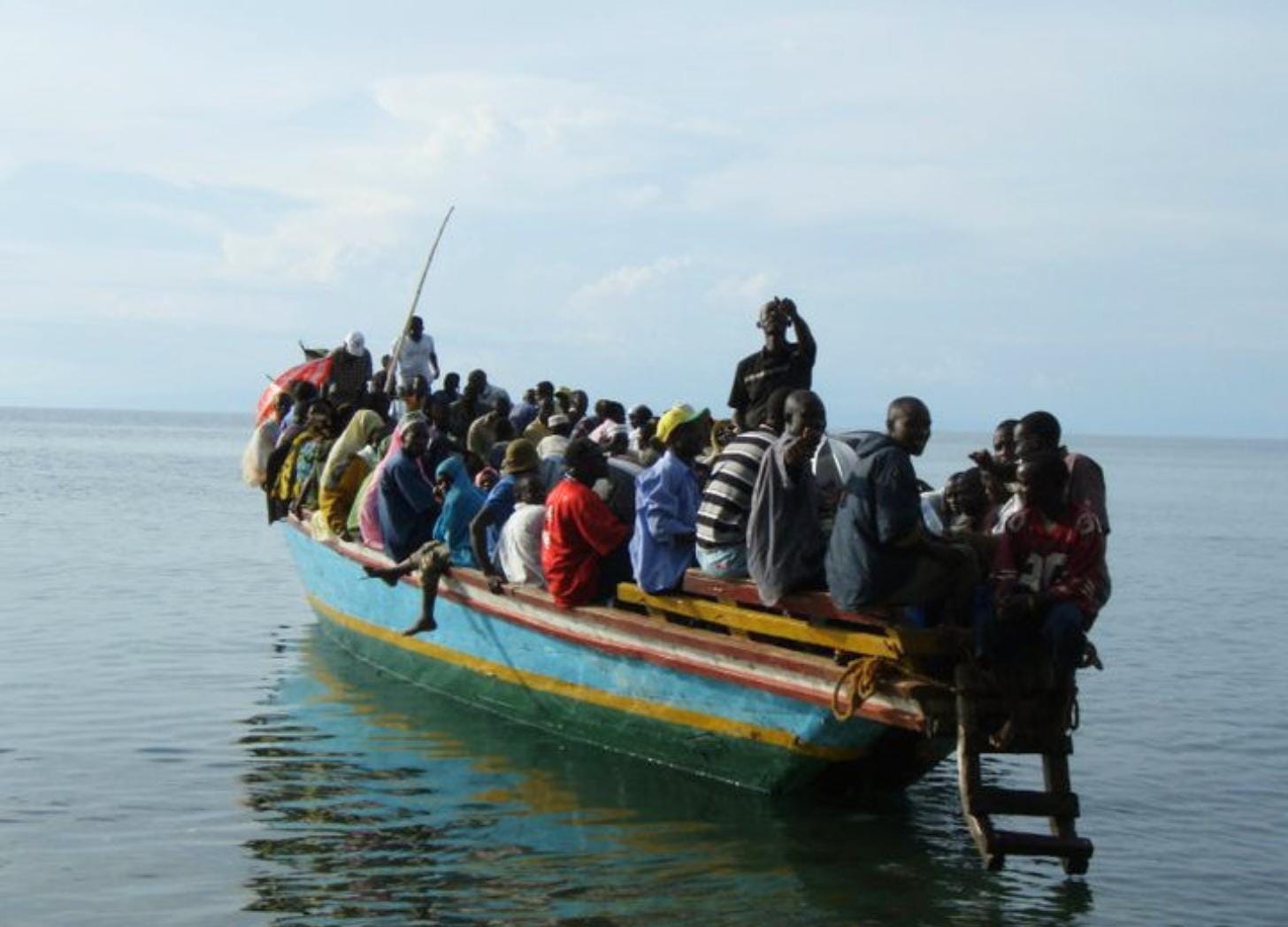
You had to find a place to sit. You either stood the entire time, or you found a little spot on the gunwale. We parked our butts for three hours on the rail as we made our way up the lake. As we took this heavily burdened boat up the lake, a guy had to bail water at the same time because there was a leak. Someone was always bailing water out of the bottom of the boat. I wondered how many people on board could swim.
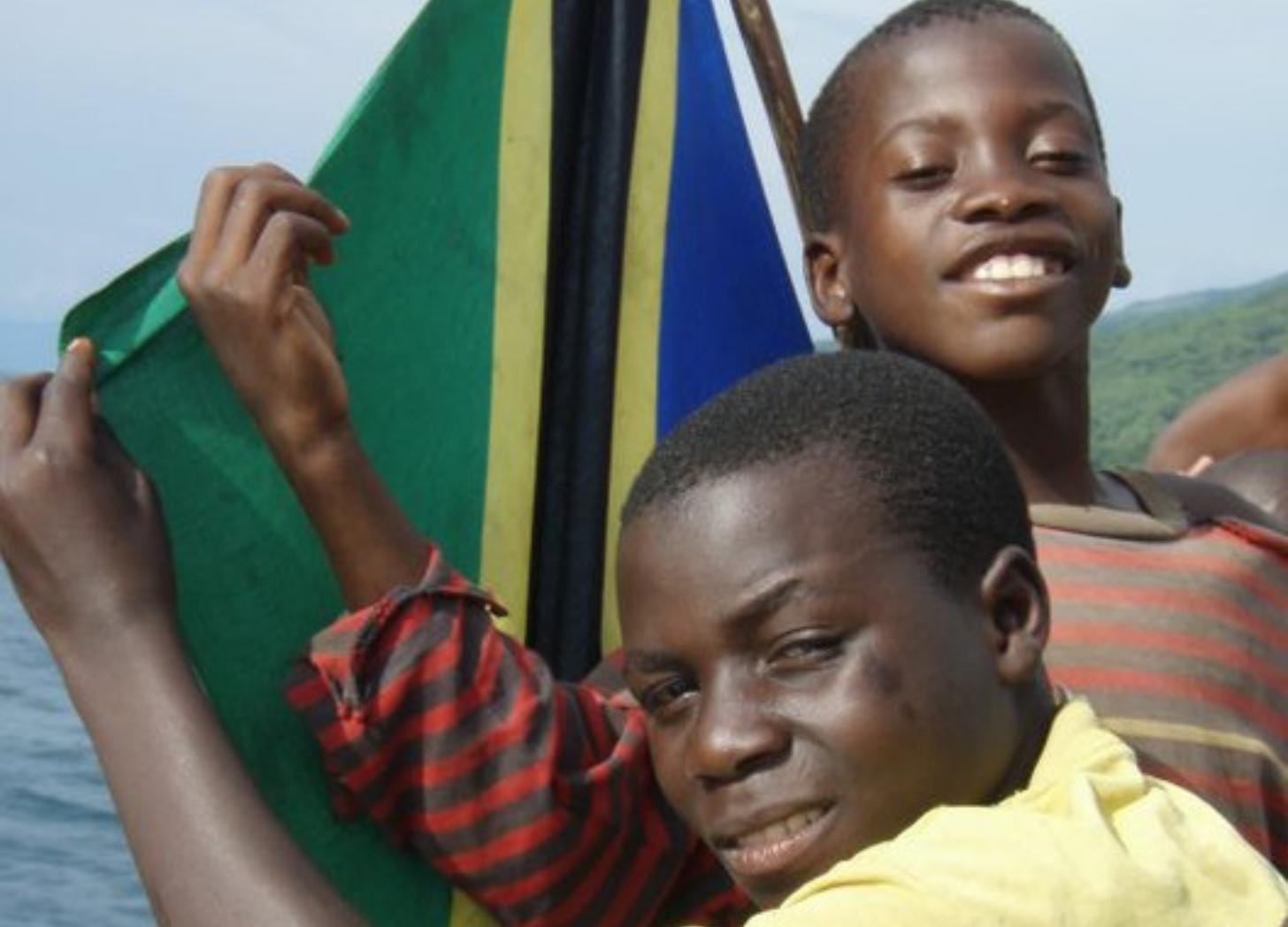
I sat next to two young Tanzanian boys and took a picture with them holding up the Tanzania flag.
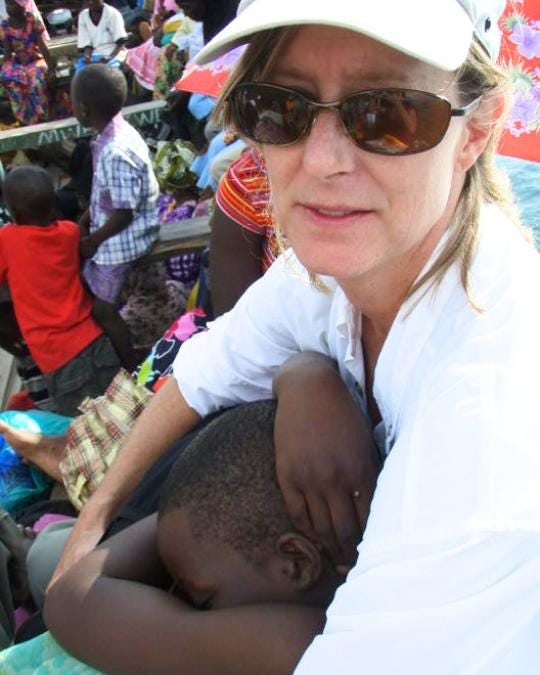
The day was hot. A woman near me stood with her toddler in her arms. She looked tired. She did not speak English. I gestured. She handed her child to me. He slept against my chest until her village. Then I handed him back.
The boat stopped at little villages along the lake. We were the last stop. There were fewer and fewer passengers with each stop until we were the last people aboard.
At Gombe we were staying in the cinder block dorm building. Our dorm room had a toilet with no seat, or door. You could do your business and shower at the same time. A communal room with tables and chairs for socializing.
Baboons everywhere. The windows had bars on them to keep them out. From the inside it felt like jail. At night baboons rattled the bars and tried to get into the building. When baboons roar, they sound like big cats, like lions.
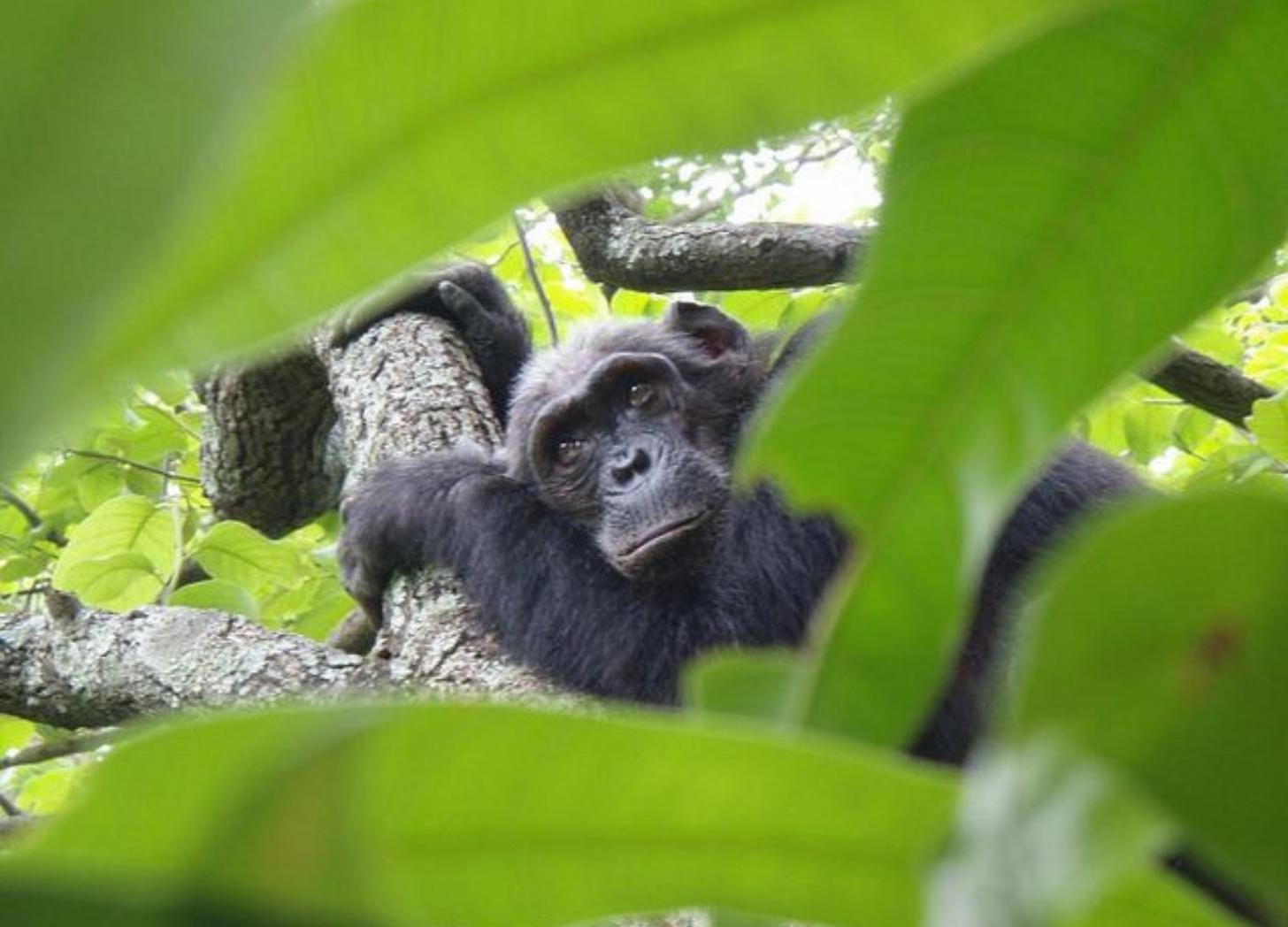
During the day, we hiked the mountainside with a guide. We found a troop of chimps and sat with them. I swear one of them was less than two meters from me, about five or six feet. You could take pictures. Just keep a low profile. There one time I sat in tall grass on the mountainside and looked across at the Congo. Wow, there’s the Congo, there’s Burundi, there’s a chimp.
Jane’s camp was different. A roof over open air. Walls of chicken wire. Her desk. Her bed. Her books. No walls between her and the jungle. From wherever she sat she could see out. More rustic than our dorm.
Three or four days later, we did the whole boat trip in reverse, back down the lake to Kigoma. From Kigoma we flew to Dar es Salaam, our gateway back to the States and Mexico. That night in Dar es Salaam, we had a nice hotel room. Two women who had not had a shower in a few days. Questionable food, warm beer, and here we were in a nice hotel. Each of us had what we considered to be nice clothes. If they were clean, they were considered nice.
That night, dressed up in our clean clothes, we went to the hotel restaurant. The hotel was a nondescript chain. The restaurant felt fancy after time in the bush. The menu. The drinks. The service. They brought us a gin and tonic with ice in it. We did not talk much. What do you say after a trip like that. We were grateful. The shower. The ice. The clean clothes. The whole trip.
We took our separate planes home from Dar es Salaam.
It was not goodbye. Never is, with us.

I have to share a review I got today via email.
I knew you had amazing adventures, but until I started reading, your writings, i didn’t comprehend how amazing. 😘
from my Mom.
This is the kind of travel story that doesn’t polish the dust off before handing it to the reader.
The warm beer, the bus, the boat, the donkey, the final gin and tonic with ice — all of it feels lived rather than arranged.
And that last line about goodbye is just right. Some friendships don’t end. They simply take separate planes for a while.