


October marked the end of my summer season working on a boat. The Merrymeeting, a 56-foot boat owned by the Maine Maritime Museum. Part bilge-rat, part deckhand, part Julie McCoy. Warm welcomes aboard, and narration on the way down the Kennebec to the North Atlantic. Shipbuilding, lighthouses, and wildlife, classic Maine.
My skills are honed. I can spot an eagle almost a quarter-mile off. I can tell you what kind of seal it is from the nose sticking out of the water. I can answer most of what anybody wants to know about Maine, which is impressive for a person who has lived here five years.
Sooner or later somebody asks whether we’re going to see puffins. I do have to chuckle, because I have more experience with puffins than the question assumes.
“No. Wrong part of the coast.”
Years ago I did get out to where they are. Machias Seal Island, off Downeast Maine, twelve miles out at the mouth of the Bay of Fundy, sitting as far from New Brunswick as it does from here.
In August of 2018 I was wandering around Rockland with Eric. We popped into a hole-in-the-wall storefront belonging to the Audubon Society. The “Puffin Project Visitors Center.” I hadn’t seen a puffin in Maine. I wasn’t living here yet and I didn’t know they could be found in Maine, at all.
Eric and I met in the Mexican jungle in 1993, on a cave exploration project. That’s a whole other story and we’re both going to need a glass of wine for it.
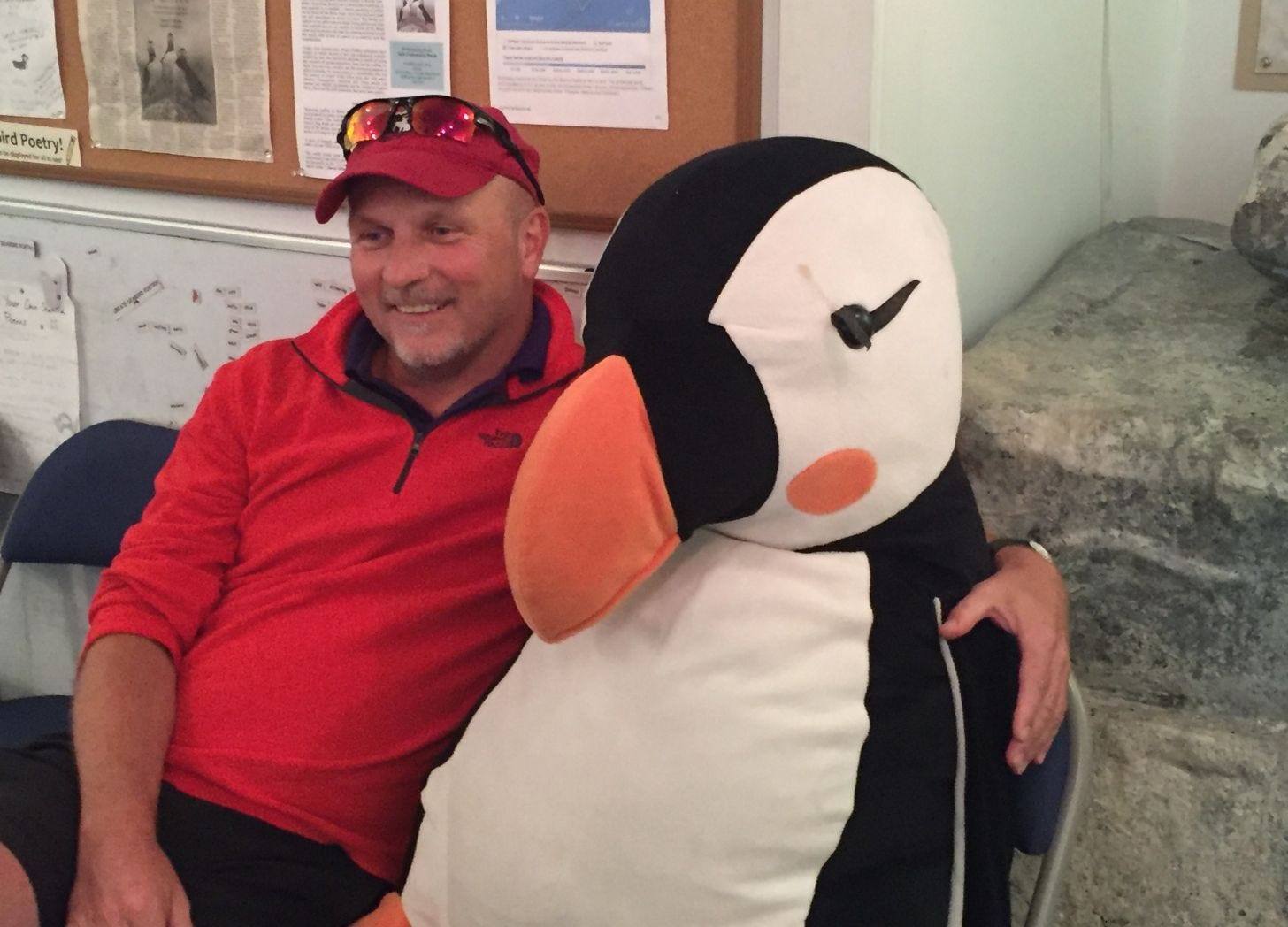
The woman at the desk told us to wander around. Puffin posters, puffin socks, puffin webcams and at the end of it a puffin theater. I use the word “theater.” It was all six folding chairs and a video projector. We watched a video about, you got it, puffins. And they are as cute as everyone says. I walked out wanting to see them.
I grabbed a one-sheeter on the counter about how you go about doing just that. The sheet said, one boat company takes people out. They open reservations for the whole season on the first business day of the new year. No email. No booking online. Call.
So on the first business day of 2019, I called. Busy signal, again and again. I am not going to oversell how long this went on, but it went on. It reminds me of calling a radio station as a kid, trying to be the eleventh caller and win tickets or a vinyl album. I am dating myself I am sure.
When a woman finally answered, she asked what date I wanted. It was January. I was in Texas.
I had no idea. I picked a random day in the middle of June and said there would be two of us. Then she gave me an address to mail a check. A check. I hadn’t owned a checkbook in years. On a trip to the bank, they printed a check for me. My cleared check then served as my trip confirmation.
Still living in Texas when June came, I flew up to Maine to visit Eric and go look at the birds.
Eric doesn’t do tours. He grew up here and treats the whole state as his backyard, so paying a stranger to take him somewhere in it isn’t his idea of a fun day out. He was game anyway.
The haul up to Cutler Harbor from midcoast Maine is about a four-hour drive. We were to meet the boat before the crack of dawn so we decided to head up a day early and stay in Lubec.
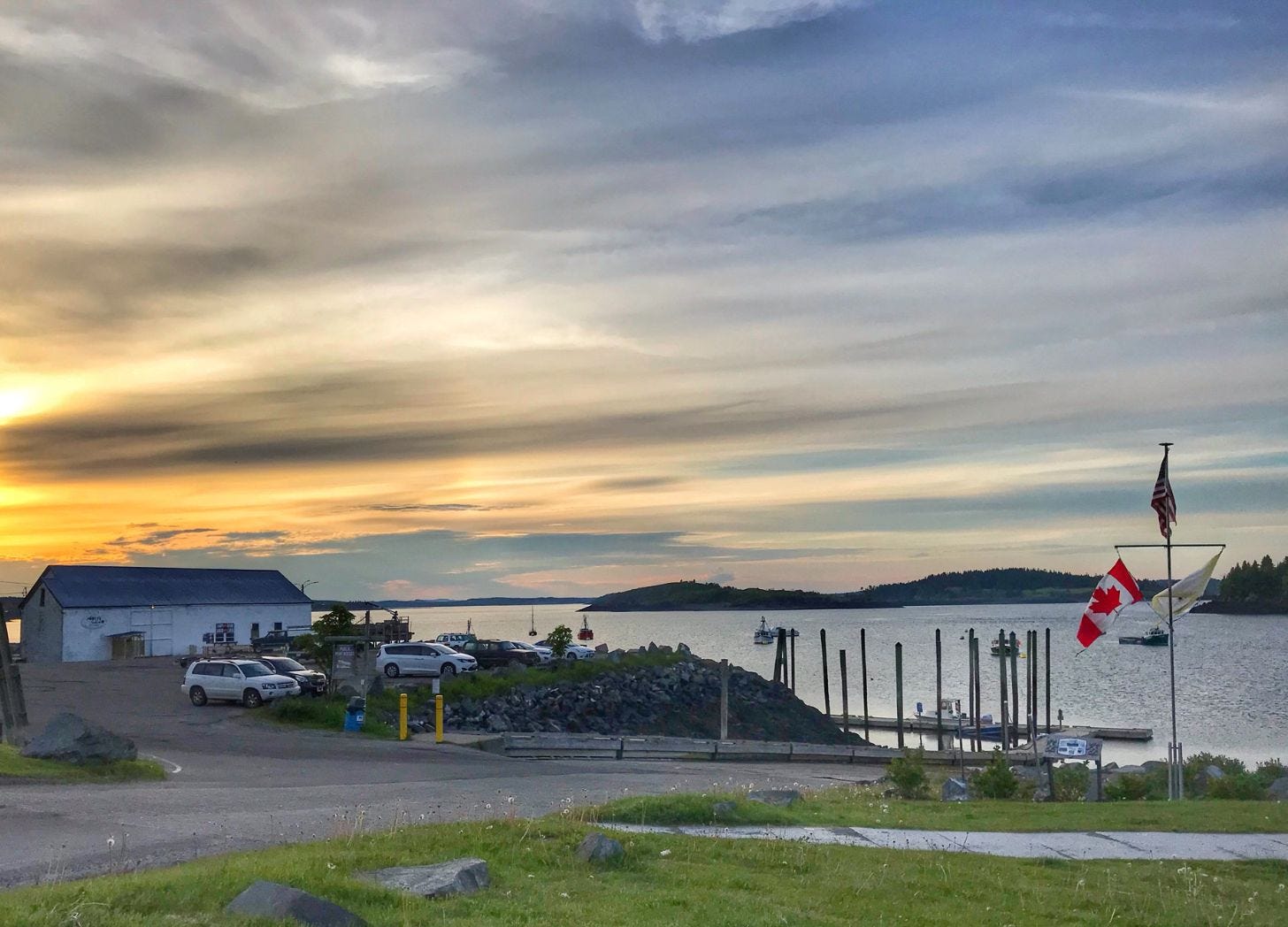
Lubec, one of the first places in the US to get the sun. A few blocks big. The town ran on smoked herring and sardine canneries once. The McCurdy Smokehouse Museum is what’s left of that trade. West Quoddy Head Light, the red-and-white one I’m sure you’ve seen a photograph of, sits in the state park at the edge of town.
Across the water is Campobello Island, New Brunswick, Canada, where Franklin and Eleanor Roosevelt had their summer house. Thirty-four rooms. They called it a cottage.
In town we ate at one of the two restaurants that were open. Of course seafood and “chowdah” were the main fare. Burgers were an afterthought at the bottom of the menu. The meal and a couple of local beers were pricey. Nobody is driving to Lubec by accident.
Eric’s high school classmate Heather runs the Eastland Motel outside of town. Twenty-two rooms, and they lend out snowshoes. Most people stop at Acadia. Lubec is another two hours past that.
We were up before dawn and missed the homemade breakfast that came with the room. In-room coffee instead, and a half-hour drive to the harbor.
I had come up from Texas without understanding that June is not summer in Maine, and that it’s less summer the further Downeast you go. I went out in a coat of Eric’s with the sleeves past my hands, and a headband to keep my ears warm. Twenty-seven years in Mexico thins the blood.
The bay was socked-in with fog. Pea soup, as they say. Though you couldn’t see much of anything, you could hear gulls and the stanchions on the sailboats clanging against the masts. We sat in the car until other signs of life appeared on the dock.
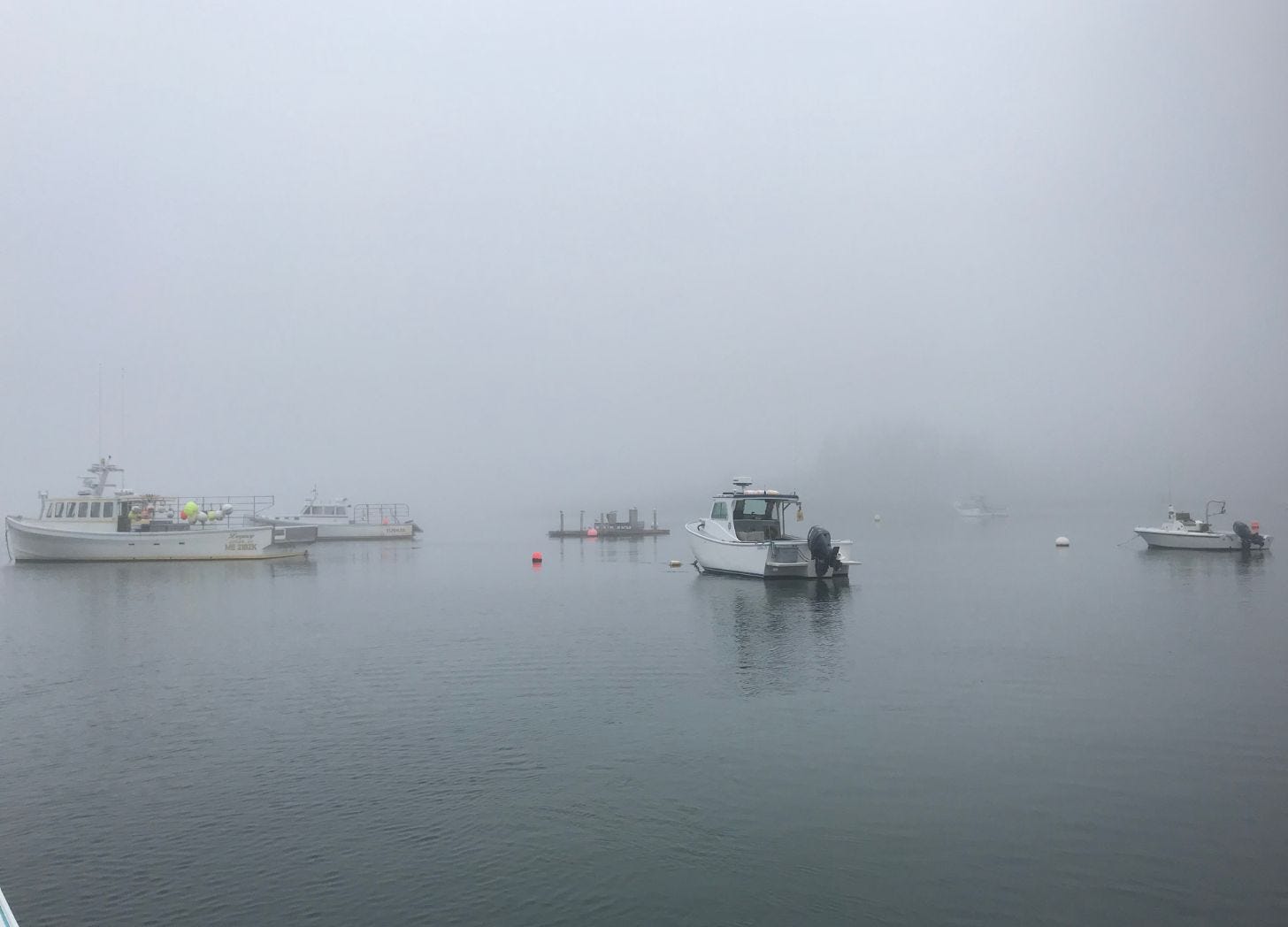
Us and thirteen others, standing there in the harbor. A woman with a clipboard checked our names off, doing her best to look cheery about it at that godforsaken hour on a dreary Thursday. A dinghy shuttled us out to a lobster boat called the Barbara Frost. On deck were a few white plastic chairs, the kind you buy at a hardware store. Up in the wheelhouse, a mate in his thirties and the captain, in rubber bib waders held up by suspenders, with a scraggly beard.
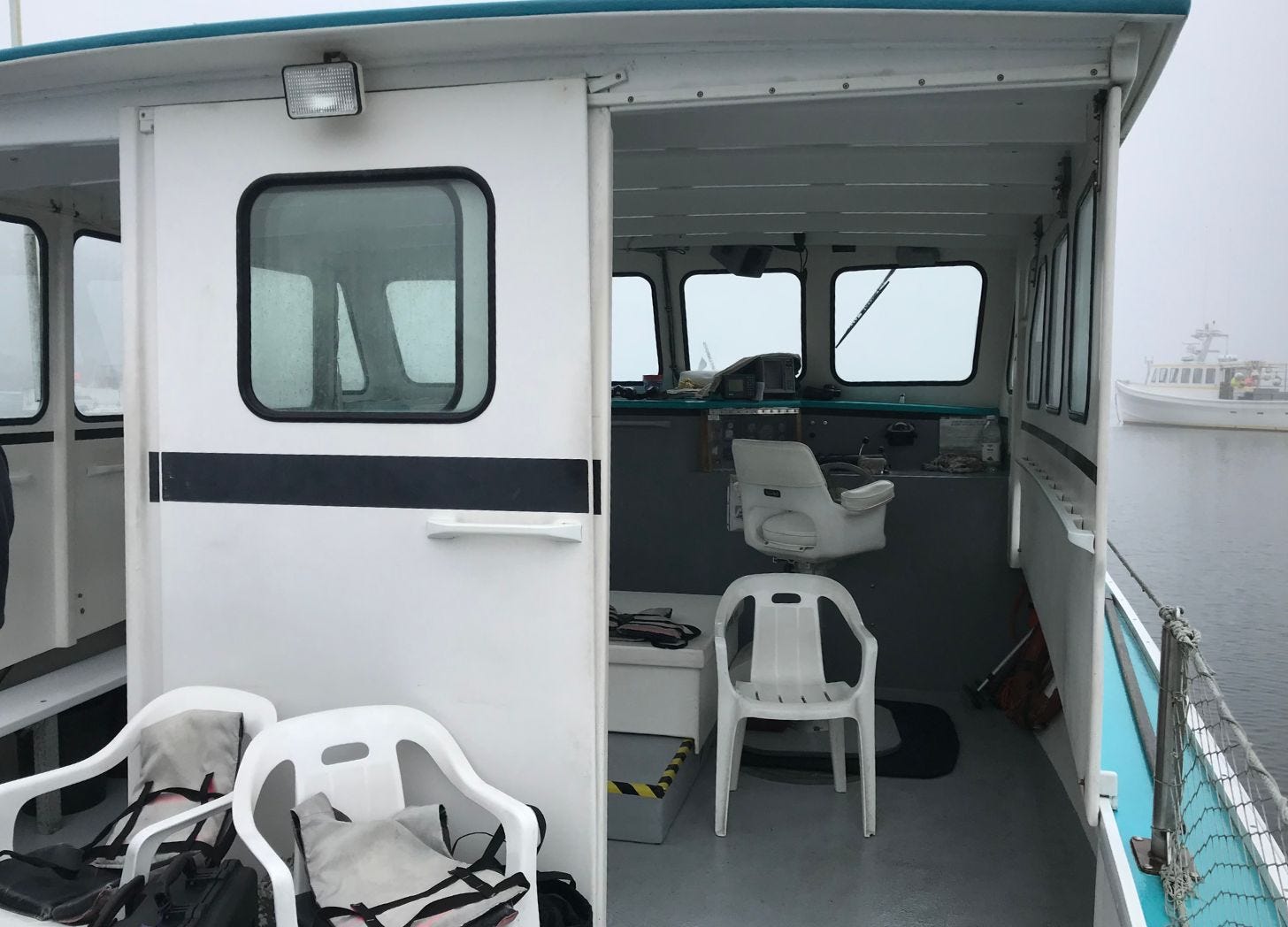
Through the harbor, dodging boats and buoys, we were out in the open North Atlantic with the fog still on us. The ocean swells were kind. It’s about an hour out.
There wasn’t much chit-chat on deck. We couldn’t hear anything over the diesel anyway. Which left me looking at the rest of them. A boat full of men with camera equipment, and one other woman, out in the mist, about to point lenses the size of a loaf of bread on tripods at a bird that does not weigh a pound.
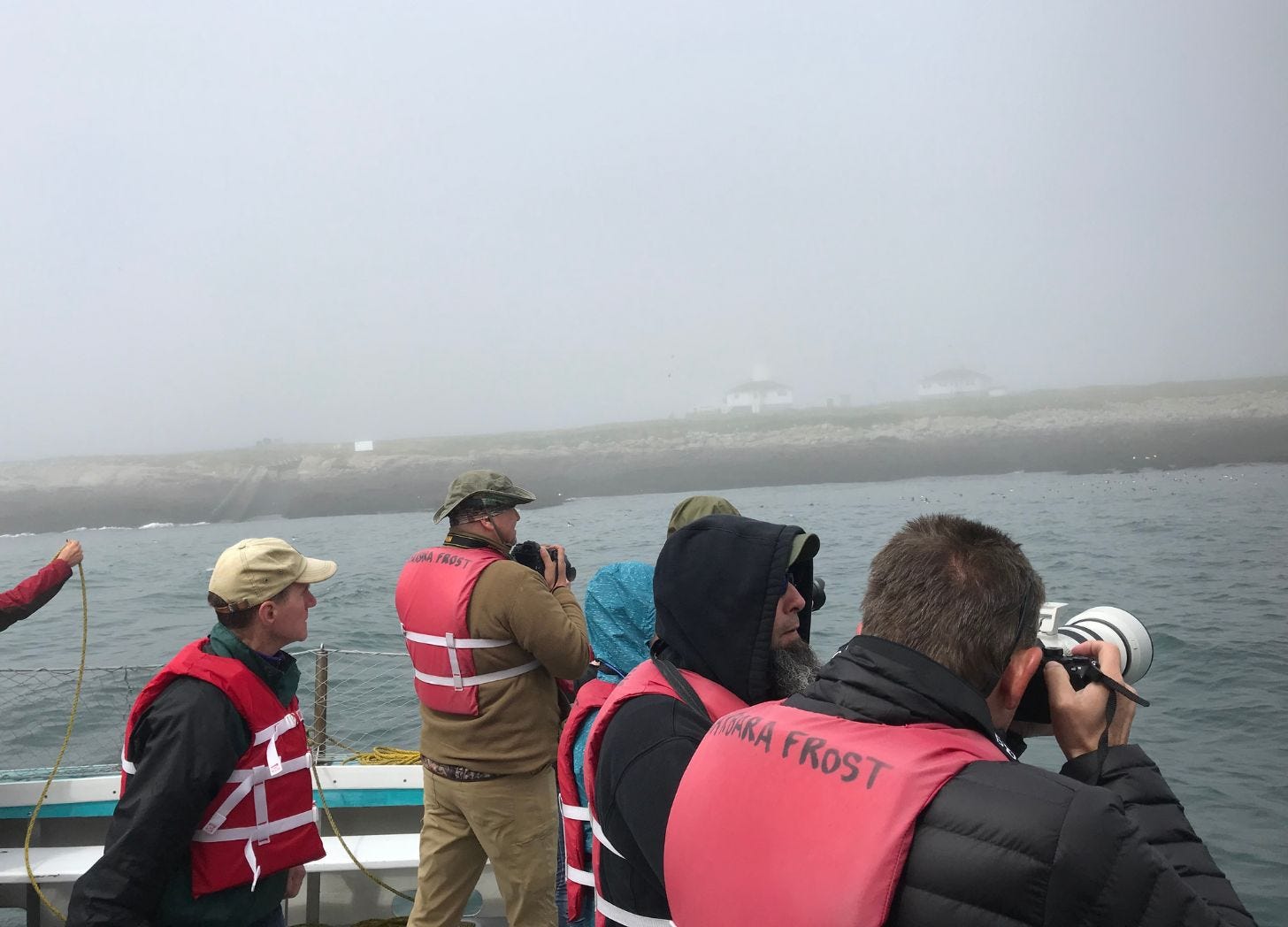
We made our way through the fog, riding the growing swells. Somewhere in that the captain told us straight out. “Landing isn’t guaranteed,” he said. “Seas get too rough to put us ashore, we do our bird-watching from the boat, turn her ‘round and head home.”
Oh no. Six months of waiting on a day I picked at random from my kitchen in Texas. A flight to Maine, a four-hour drive to the easternmost point in the contiguous United States. A night in Lubec. And it had not occurred to me until right then that we might not get ashore.
I saw the lighthouse first. It came up out of the fog, then the outline of a couple of buildings under it. There’s no pier. The Barbara Frost anchored off the east side. They ran us in a few at a time in the skiff they had towed out behind us. The crossing had been easy enough, but by the island the surf was breaking on the rocky shore. I stepped off the rocking skiff onto the dock. Picked my moment. Scrambled before the next swell. Then steep wooden steps up off the shoreline, because the tide there runs twelve to fifteen feet. Eric went up carrying cameras and almost every lens he owns.
A research guide met us at the top of the steps. The instructions were clear. Follow him. Stay on the wooden walkways. No loud talking and don’t hassle the birds. We walked waving sticks over our heads. The terns nest right up against the boardwalk and they’ll come at you. They go for the highest point, so the stick is the highest point. It does not stop them shitting on you. Aggressive fucks.
It drizzled steady most of the morning. The kind of rain that seeps into your bones. Forty-six degrees, and it felt a good deal colder than that. I stood out there anyway and watched the birds jostle for space on the rock.
Whose rock is it?
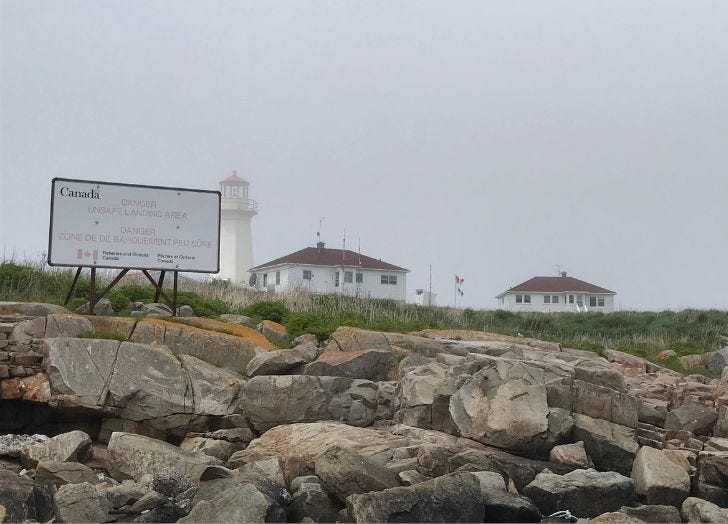
Nobody can tell you who owns Machias Seal Island. The United States says it is American, Canada says it is Canadian, and what both claims rest on is a couple of old treaties nobody wants to reopen.
Canada has kept a light on that rock since 1832. The first one was two wooden towers and a house for a keeper named John Pendlebury, who made 130 pounds a year. In 1944 they made the whole place a bird sanctuary.
The light runs itself now. Canada still keeps two people out there, flown in and flown home in shifts. It’s their turf and they mean to keep it.
The real argument is over the lobster water. Both sides fish it, and everybody says they get along fine.
Outside the researchers’ quarters, they gave us a briefing about the island. Just fifteen of us and a bunch of scientists. They were direct, informative, none of the hype of a tour guide working for tips.
We were assigned a bird blind. I had no idea that was part of it. It’s a shed with slots cut in the side of it. The blinds hold three or four people and there are several set up around the island, right in among the rocks and burrows. We shared ours with two other people. Eric got his lens out through the slot and was gone for the duration.
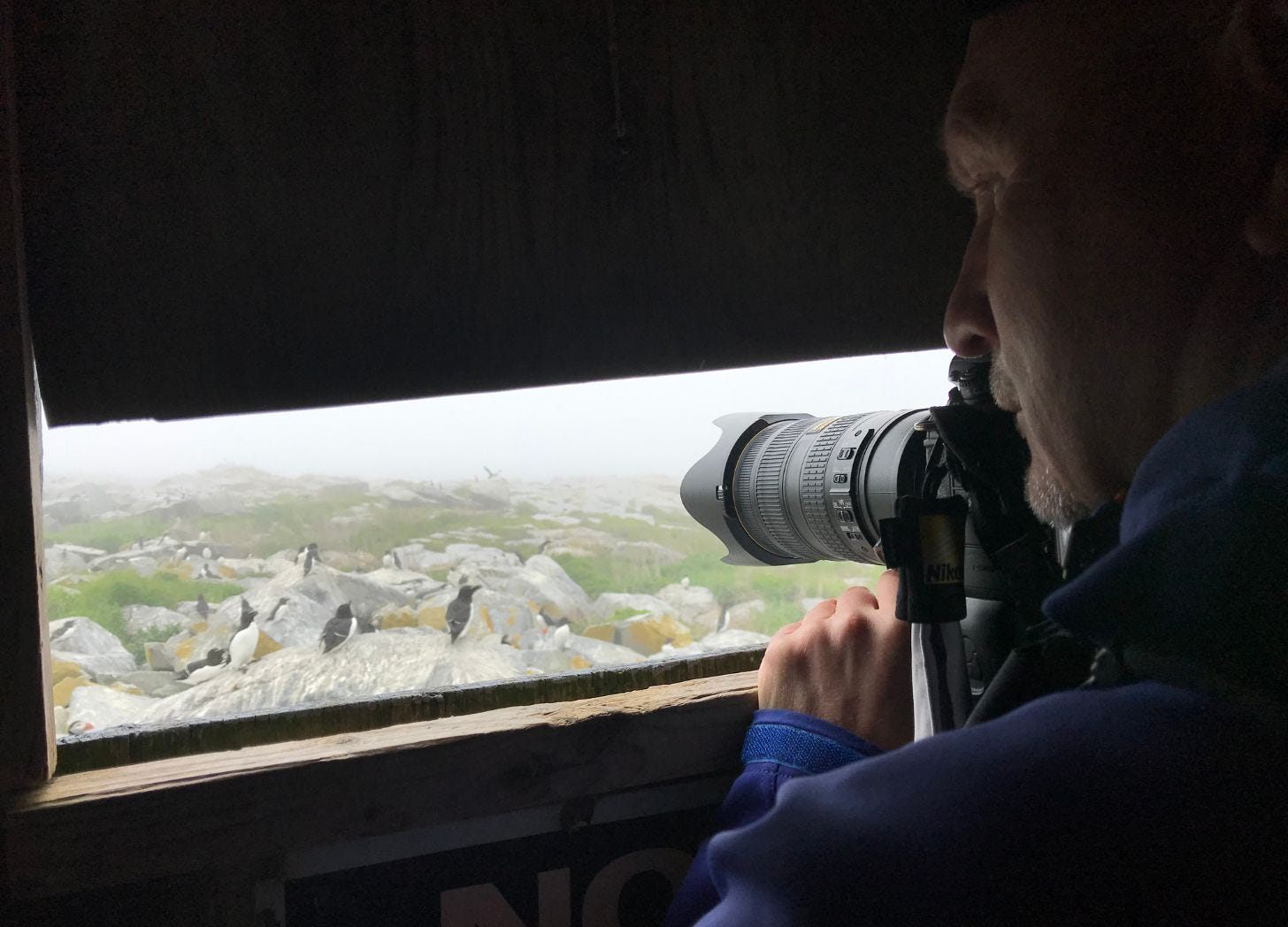
The island was deafening at times with the sound of birds and the underlying rumble of the waves breaking along the shore.
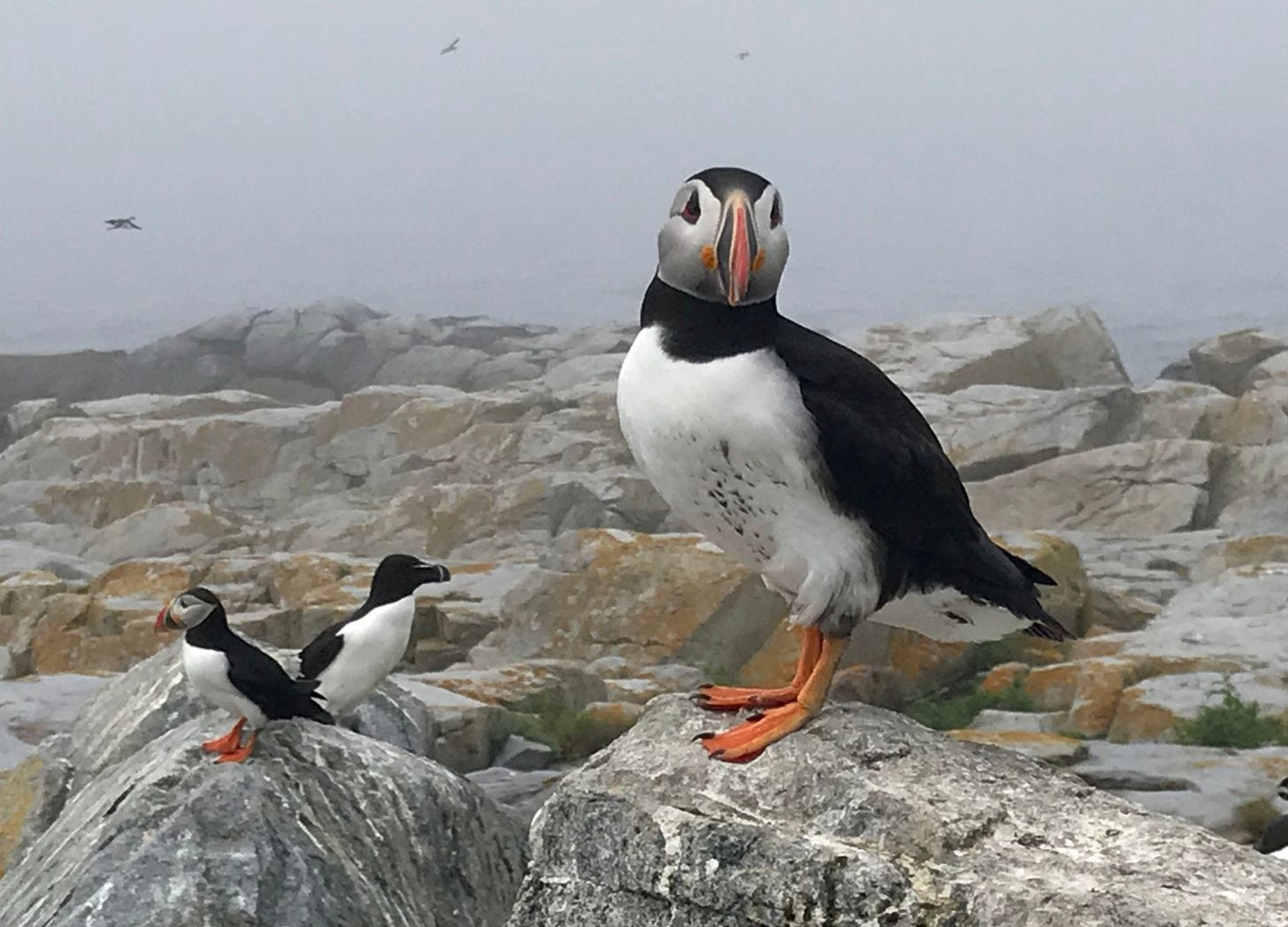
The closest puffins were three or four feet away. Standing around on the rocks, waddling along the boards, going in and out of the ground. Terns coming in over the top of them. Razorbills, murres, guillemots, eiders. A northern gannet went by. Four of us in a shed, spying.
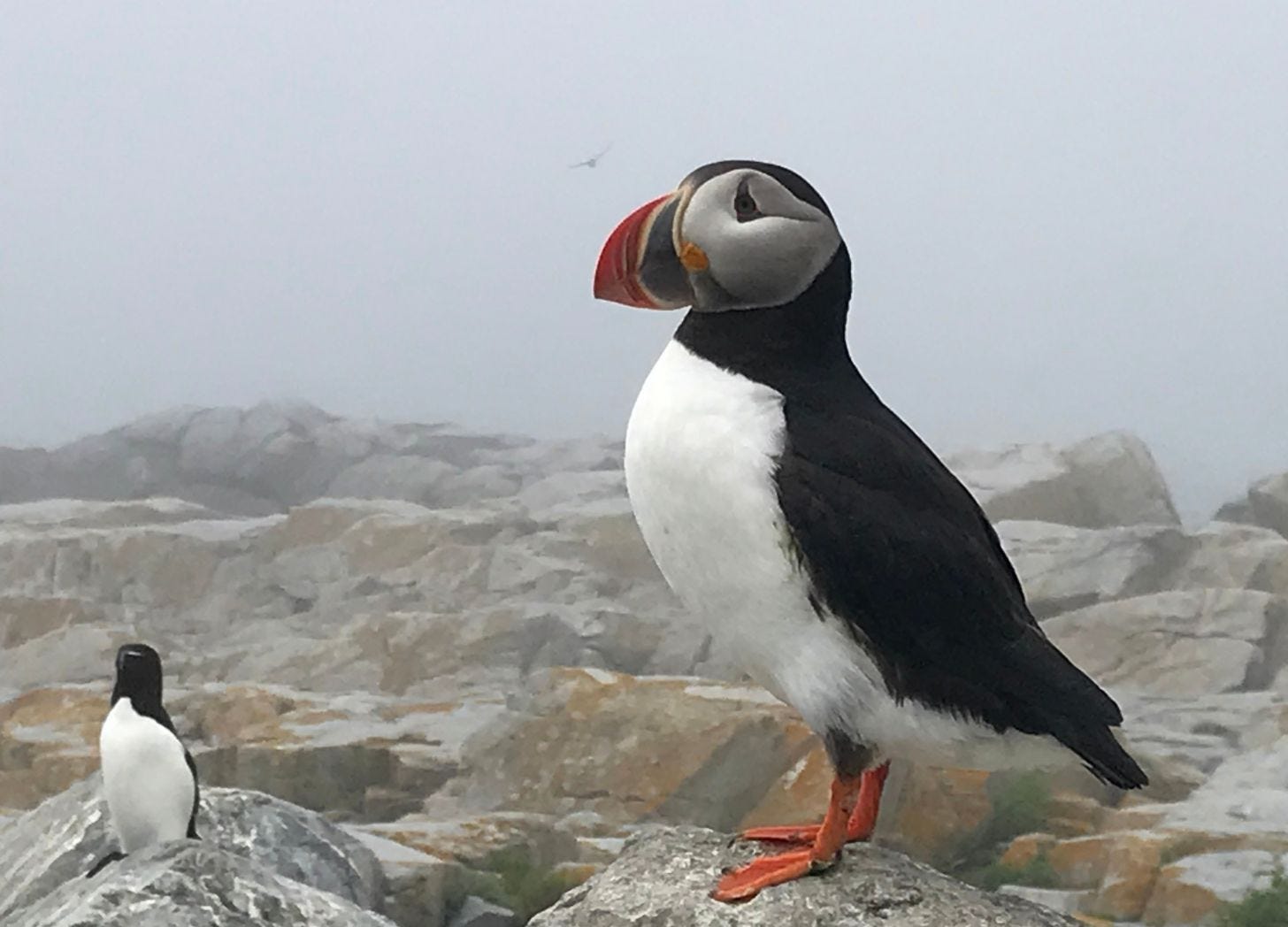
Puffins don’t nest on ledges. They dig burrows in the soil, one pair to a burrow, one egg a year, and they come back to the same burrow, with the same mate, year after year. Some of them were under the boards we had been standing on. So the instruction about staying on the walkway isn’t about keeping off the grass.
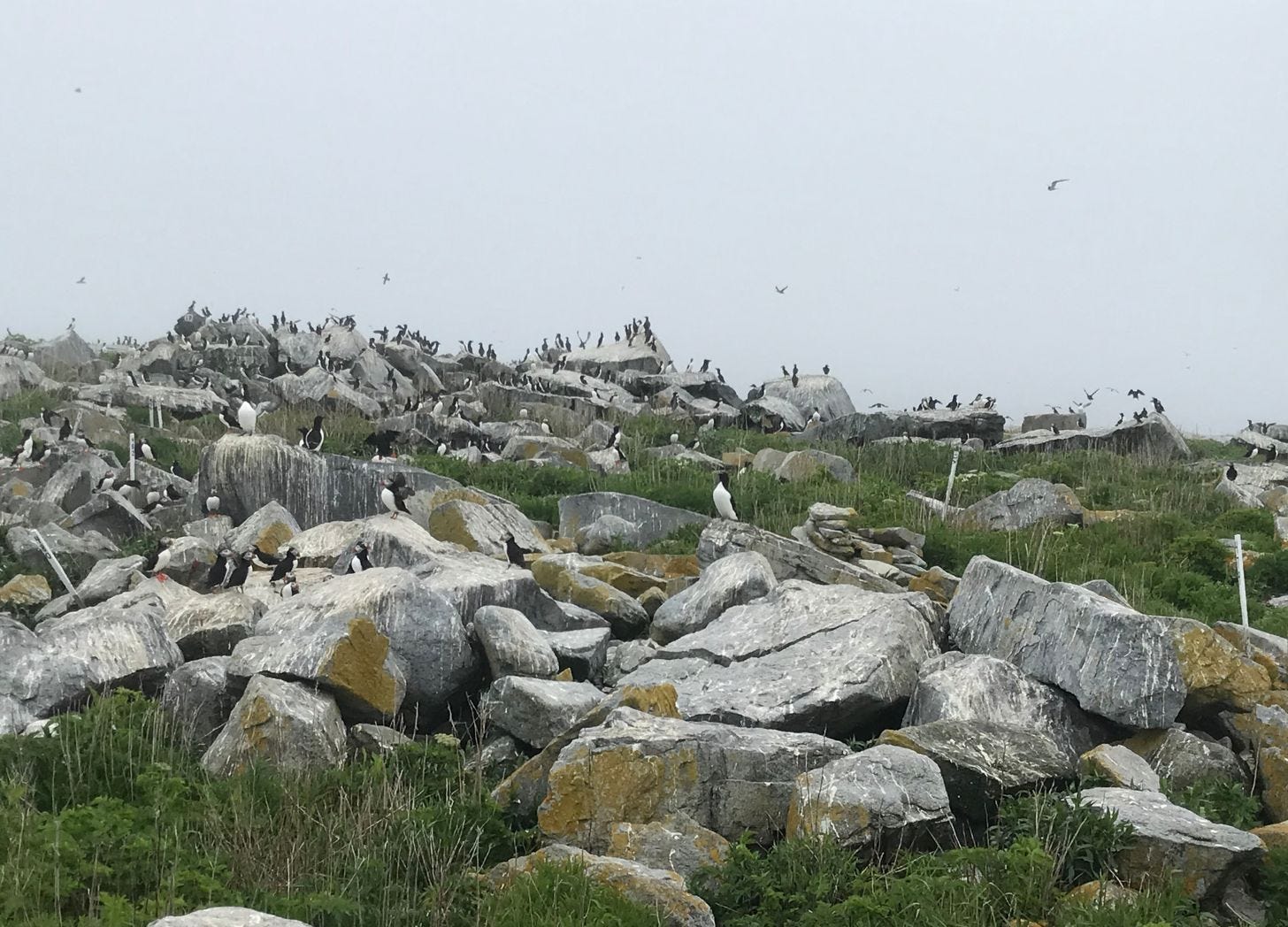
Little numbered stakes were pushed into the ground all through those rocks, marking nests and burrows. Each one has a number painted on the post, and a letter after the number if the pair moved. A researcher walks the island all season checking about a hundred nests, one at a time, to see who’s home. Add in every other bird on that rock and you are totally outnumbered. Nine months of the year these little birds are out on the open ocean by themselves. They come to land only to breed, and we had turned up at the peak of it. We had missed the courtship, which happens in May.
The chick hatches in gray down and the parents feed it for three months. Then it leaves at night and goes straight out to sea. Alone.
Puffins “fly” underwater, wings as paddles and feet as rudders, twenty to thirty seconds under on a dive and recorded as deep as 200 feet. In the air their wings go so fast you can’t even count. The bright beak is seasonal. The colored plates shed after breeding and leave a smaller gray bill for winter. A spring fashion statement, then back to neutrals.
Who else is on that rock?
Atlantic puffins. Nobody has a straight number. Depending who you ask it’s a thousand pairs or it’s eight thousand, and the people counting don’t agree on whether they’re counting birds, pairs, or holes in the ground. If somebody hands you a figure down to the last pair, they made it up.
Razorbills, a few thousand pairs. Common murres, several hundred.
Arctic and common terns, which defend a nest by diving at whatever is near it, including your head.
Black guillemots, common eiders, Leach’s storm-petrels, and now and then roseate terns and laughing gulls.
There was a breeze that day, which I was grateful for. The place is thick with birds and with bird shit. On a still, warm humid day it would stink. Working on a boat now myself those windless summer days are a crime against the nose.
The four of us in the bird blind barely whispered. “Hey, look at this. Check this out.” In between, the shutter firing fast on Eric’s camera over and over. After about an hour or so we were escorted to a second blind on another part of the island.
A puffin parent will fly thirty miles out and thirty miles back for one mouthful of fish for one chick. And the fish has to be skinny enough to go down the chick’s throat and fatty enough to be worth the trip. That’s herring, and it’s had a bad run of it. The water’s warming, and herring is what lobstermen use as bait. Which means the lobster you had for dinner was probably caught with puffin food. Ask a lobsterman what a day of bait costs now and watch his face.
When the herring isn’t available, parents bring back whatever they can get. Over on the midcoast islands, the ones Audubon runs, what they could catch was butterfish. A wide flat fish, too big to go down a chick’s throat. Researchers there found chicks dead in their burrows, surrounded by fish they could not swallow.
The summer I was out there the chicks were feasting on hake and doing just fine.
The puffins, anyway.
The Arctic terns on that same rock lost most of their chicks that summer. They died of exposure, after a run of wet days.
On the way back to the harbor we cruised by North Rock, a ledge right next to the island. The tide was out and the seals were strung along the waterline, gray and harbor. Harbor seals are smaller with the puppy-dog face everybody pictures.
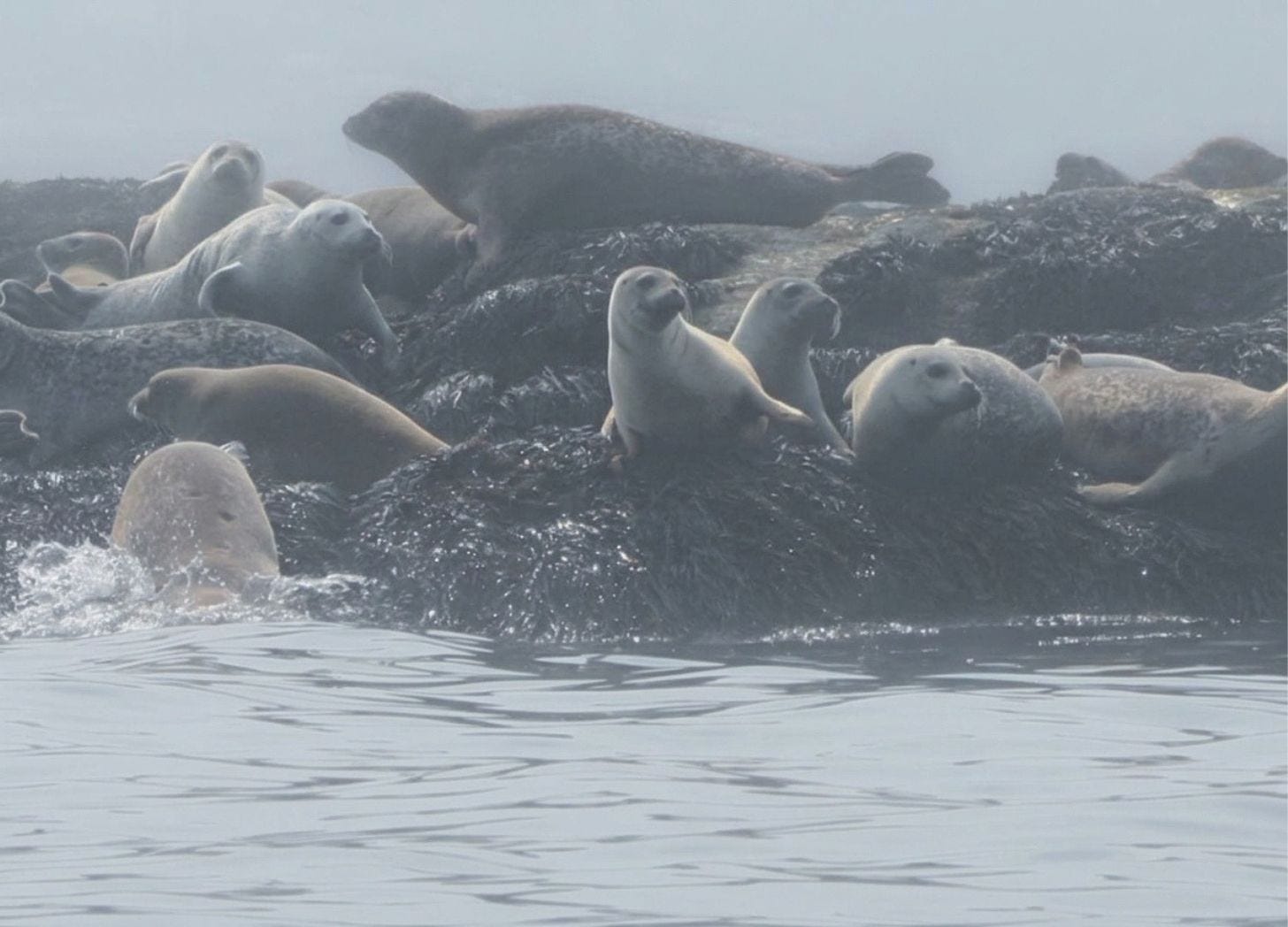
Maine paid a bounty on seals. You brought in the nose, they gave you fifty cents, a dollar after 1895. So of course somebody started making noses out of seal hide. Portland paid out on two hundred noses one year and twenty-six hundred the next before anybody thought to look. Two guys came in with eighty-six noses in a single day.
Massachusetts paid on the tail, which went about the same way, because men were cutting a hundred and fifty tails out of one pelt. The state eventually gave up and wanted the whole skin with the nose still attached.
When there was no bounty the fishermen shot seals anyway, for eating the cod. By 1973 there were about thirty gray seals left on the whole coast of Maine.
Now I get paid to point those noses out to tourists.
A few years after Machias I was in Reykjavík. On a whale watching boat, at the tail end of puffin season a guide pointed to a few puffins. From a boat, those buggers are impossible to see in the water. I sat there with binoculars looking at specks, like every tourist I have ever rolled my eyes at. Which is what I was.
Back on the Merrymeeting we go by Pond Island, which has a tern colony on it. Mostly common terns, with a few Arctic terns mixed in. Four ounces of bird, and it flies from here to the Antarctic and back every year.
That was my last trip of the season. I’ll be back on Merrymeeting in the spring, and somebody will ask me about puffins.
Nobody has ever asked me about the terns. Then again, they are not that cute.
Glossary
Bilge rat. The person who pumps the water out of the bottom of the boat. Not in the job description. Very much in the job.
Julie McCoy. The cruise director on The Love Boat. Clipboard, deck activities, relentless good cheer. If you had to look her up, I am dating myself again.
Dinghy, skiff. Two small open boats. One takes you out to the lobster boat, the other takes you off it. There is a different word for every size of small boat and somebody will correct you.
Bib waders. Rubber pants that come up to your chest with suspenders. No man looks hot in them.
Bird blind. A shed with slots cut in the side that you sit in and look through. The word for this in any other context is surveillance.
Tern stick. A stick you carry over your head so the terns go for it instead of your scalp. Exactly as dignified as it sounds.
Downeast. Northeast. Named by people sailing downwind out of Boston, which made sense then and makes none now, since you drive up to get there.
Chowdah. Chowder with the r removed. White and creamy. In 1939 a legislator from Rockland drafted a bill making the tomato version a crime. Punishable by digging a barrel of clams at high tide. He never filed it. What do New Yorkers know about chowdah anyway.
Razorbill, murre, guillemot. Three other black-and-white seabirds on that rock. None of them have a cool beak, so nobody books a trip for them.
FAQs
How do I get out there? One company runs the trip, Bold Coast. In 2019 you called them. On a telephone. On the first business day of January, and so did everybody else’s dialing finger. Now it’s an online booking system with a six percent service fee, opening sometime around mid-March. Progress.
When’s the season? Mid-May through mid-August.
What does it cost? I can’t remember what I paid, but in 2027 it ranges from $270 to $340 per person, depending on your dates.
Will I actually get on the island? Maybe. The captain tells you straight that landing isn’t guaranteed. If the sea won’t let the skiff in, you look at the birds from the boat and go home.
How hard is it, physically? You step off a moving skiff onto a dock and climb from the waterline. Steps when I went, a ramp now, and the tide runs twelve to fifteen feet so how far you climb depends on the morning. Slippery, and not wheelchair accessible. If wet rock or seasickness worries you, this one isn’t for you.
What do I wear? More than you think. Forty-six degrees in the middle of June, colder on the water. I was in a borrowed coat with the sleeves past my hands and still cold. Rain gear and shoes you don’t mind ruining.
Where do I stay? Cutler didn’t have a hotel when I went. We stayed in Lubec, at the Eastland Motel, half an hour up the road.
Do I need a serious camera? Bring whatever you like. The men on my boat had lenses the size of a loaf of bread and I won’t say they were wrong, but I got great photos on my phone.
Who actually owns the island? Still unsettled. See above, and bring it up at a party sometime.
Is it worth it? I booked it six months out from a kitchen in Texas, mailed a check, drove four hours, slept in a motel that lends snowshoes, and sat in a damp shed in the rain at forty-six degrees. Yes.
Who am I? If you are new to my writing, six months in Mexico became 27 years. A travel business built without a phone line, caves nobody had mapped, a dead body or two. I'm telling all of it now. And when I travel somewhere, I’ll report back.
The idea of planning and just spending this much time away sounds perfect to me.
I would love to see a puffin. Watching your latest adventure makes you even more cooler. I really love that you are finding what works for you.