


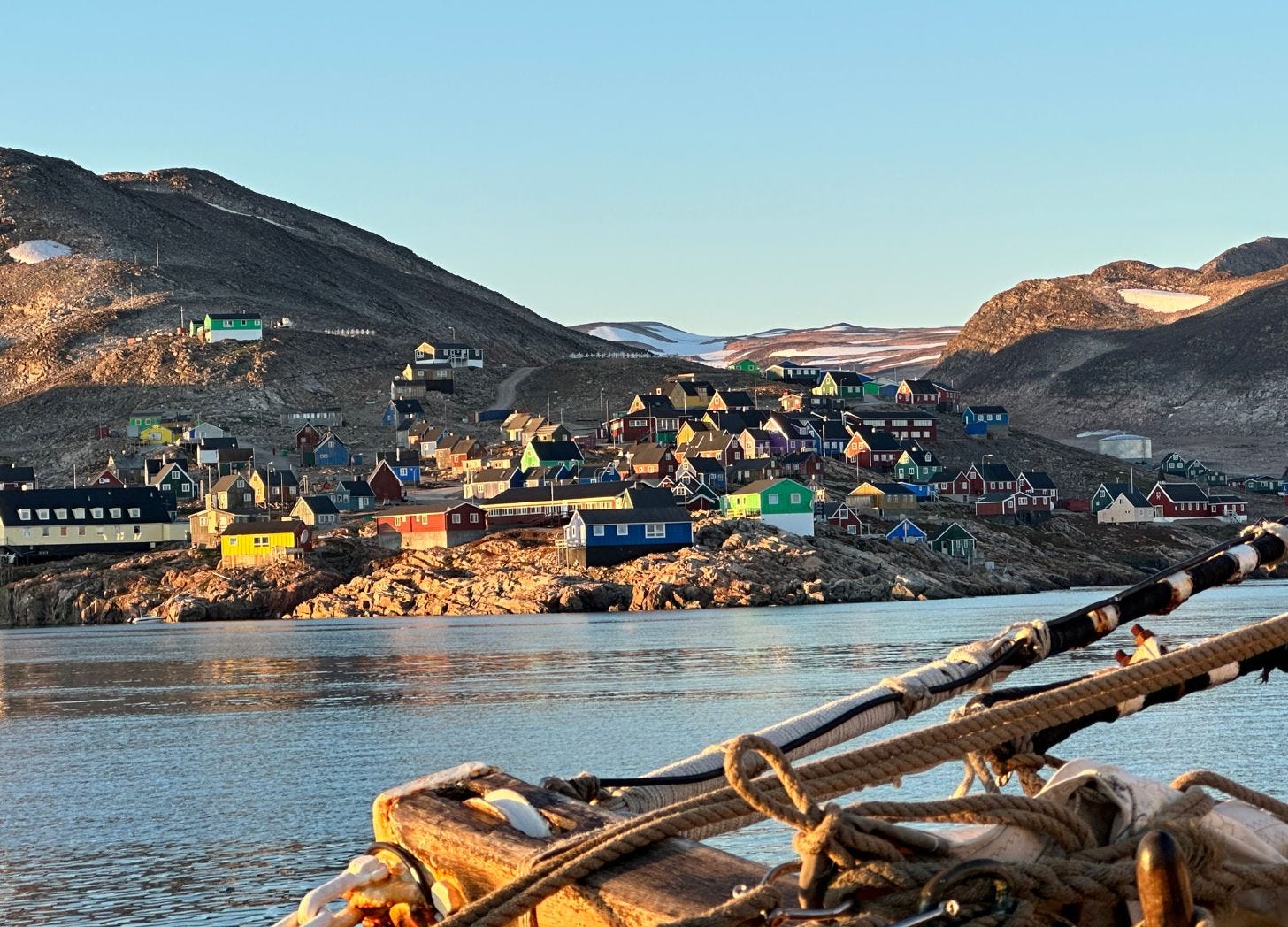
There’s a little town on a rise above the fjord in East Greenland. Ittoqqortoormiit. It means the place with the big houses in East Greenlandic. The only community on nearly 10,000 kilometers of coastline (6,200 miles). Three to four hundred people live here. Five to seven hundred visitors show up every year. I was one of them.
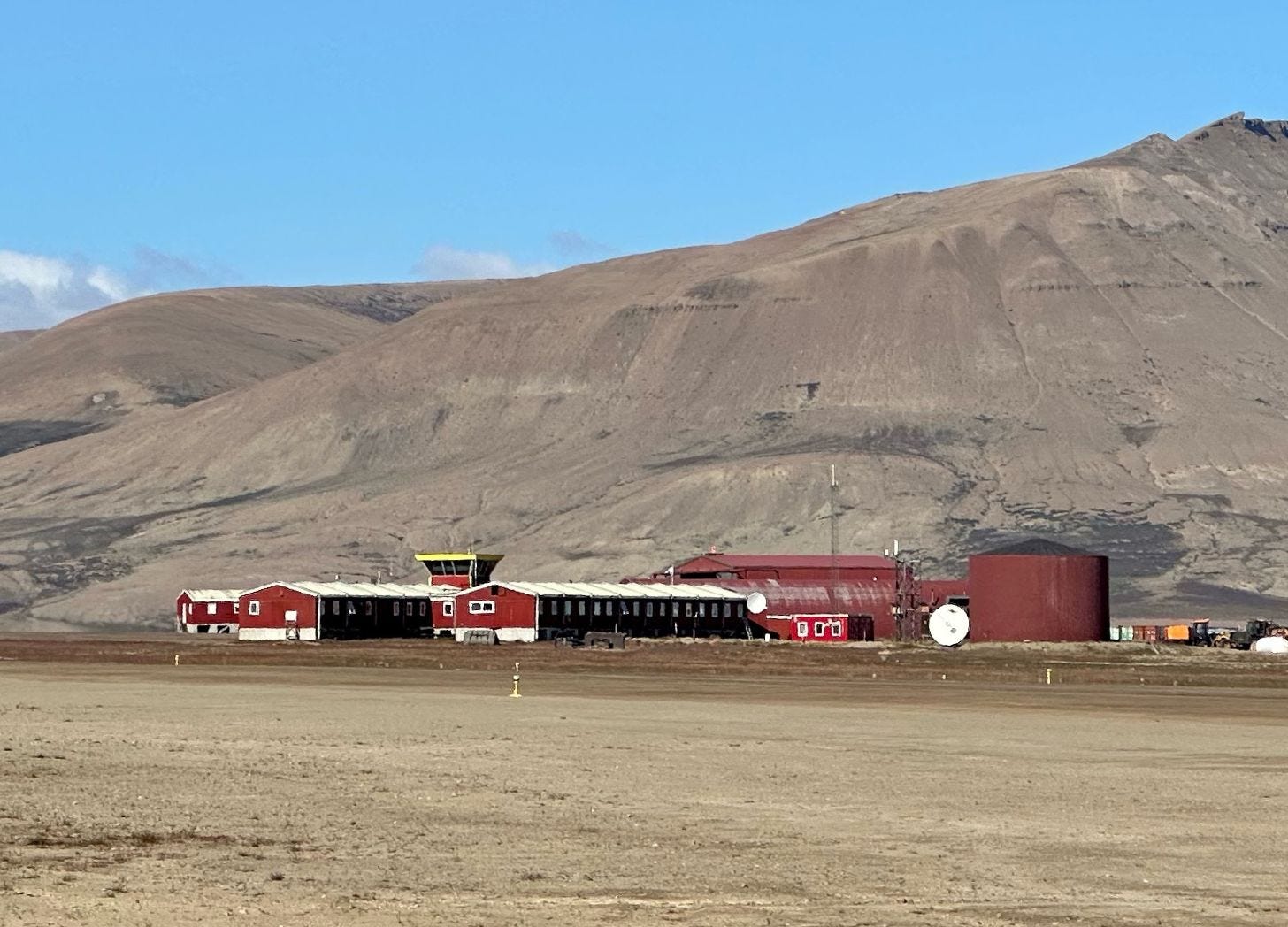
Out of Reykjavik on a private charter, we flew into Nerlerit Inaat, the airport thirty-seven kilometers up the coast. It’s a red and white metal building on barren terrain, mountains behind. Two portable toilets sat outside, strapped down to pallets. There was no plumbed sewer. Waste went into bags. When the bags filled, they got buried.
I sailed on a schooner called the Opal. She was anchored off the coast. An easy Zodiac ride from shore to ship.
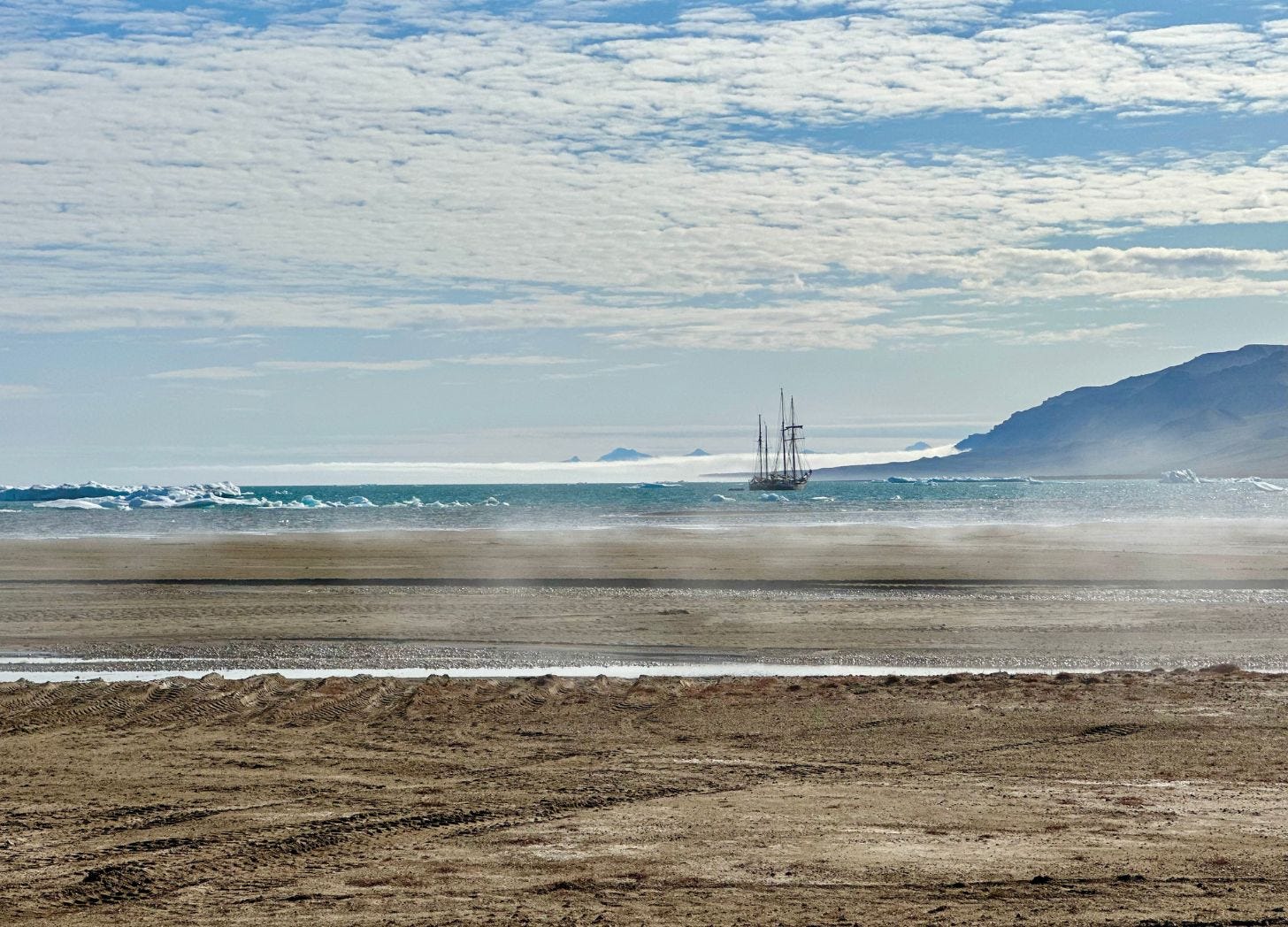
Sailing from Nerlerit Inaat toward Ittoqqortoormiit, we passed an abandoned village. A Danish colony started in 1925, the same time as Ittoqqortoormiit. The last residents of the now ghost town moved out in 2005. Some of the houses were still painted red and green and gray. Others had been bleached bare by the sun, weather, and time.
At Ittoqqortoormiit, we put on lifejackets and hopped in the Zodiac bound for the town dock. The first thing that caught my eye was a seal tied off to the dock and floating in the water. Deboned, maybe, or the skin preserving in salt. Seals are one of the animals I love. I recoiled.
The houses climbed the rise in front of us. Red, purple, green, dark blue, painted against a canvas of stark bare rock, patches of snow on the ridges, and dark water below. Pitched black roofs. Each plot with enough land for a snowmobile, a dog sled, a pickup, a motorcycle. No cul-de-sacs, dirt roads. Just above freezing temps, under a sky that could have been any hour. August at this latitude gives you twenty hours of daylight and no way to know the time without a watch.
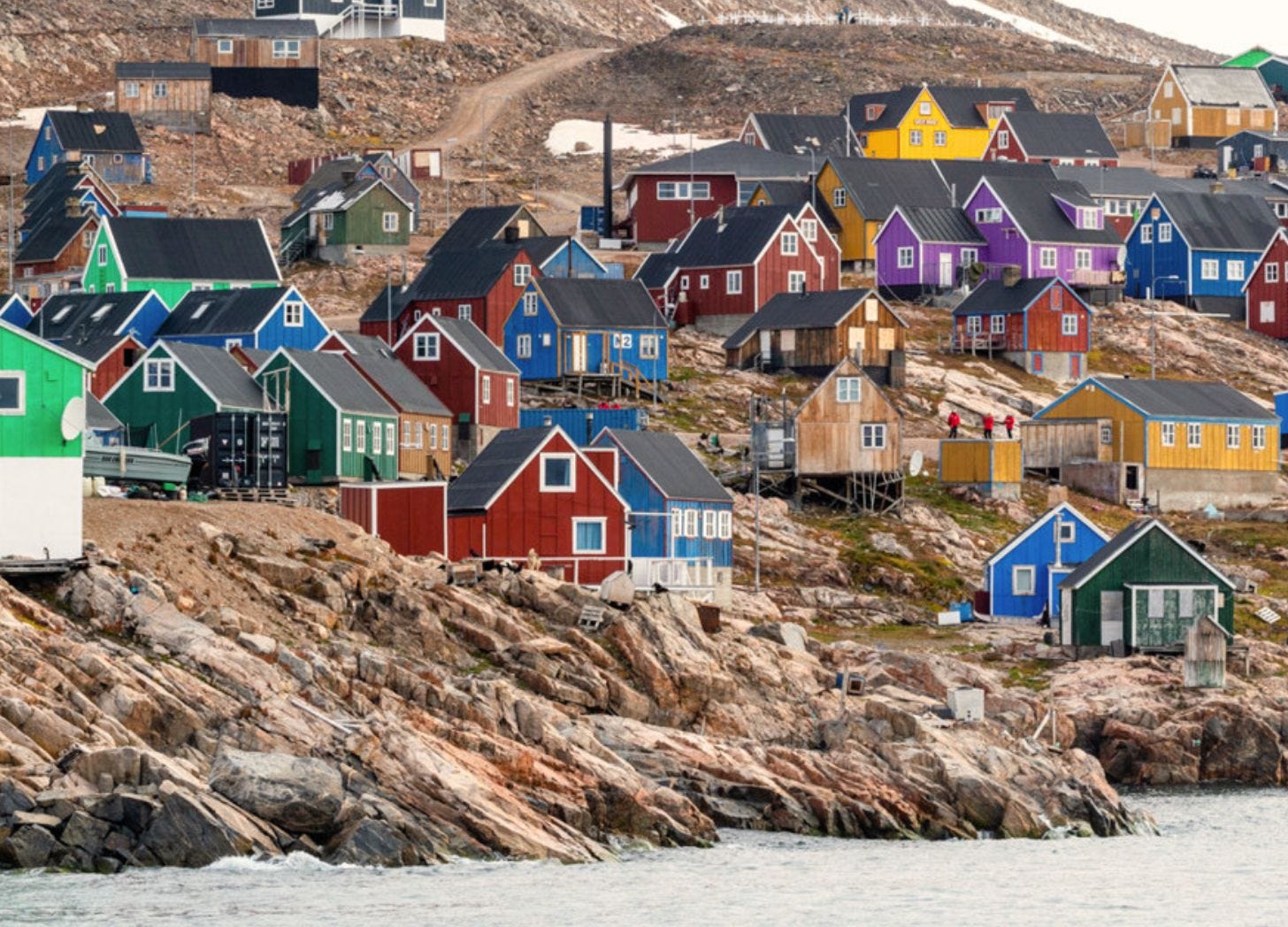
The town was quiet. A generator humming somewhere. An ATV passing, a truck, then someone on a motorcycle. Once in a while a dog barking. No throngs of people. The few I saw paid me no mind. I paid them the same.
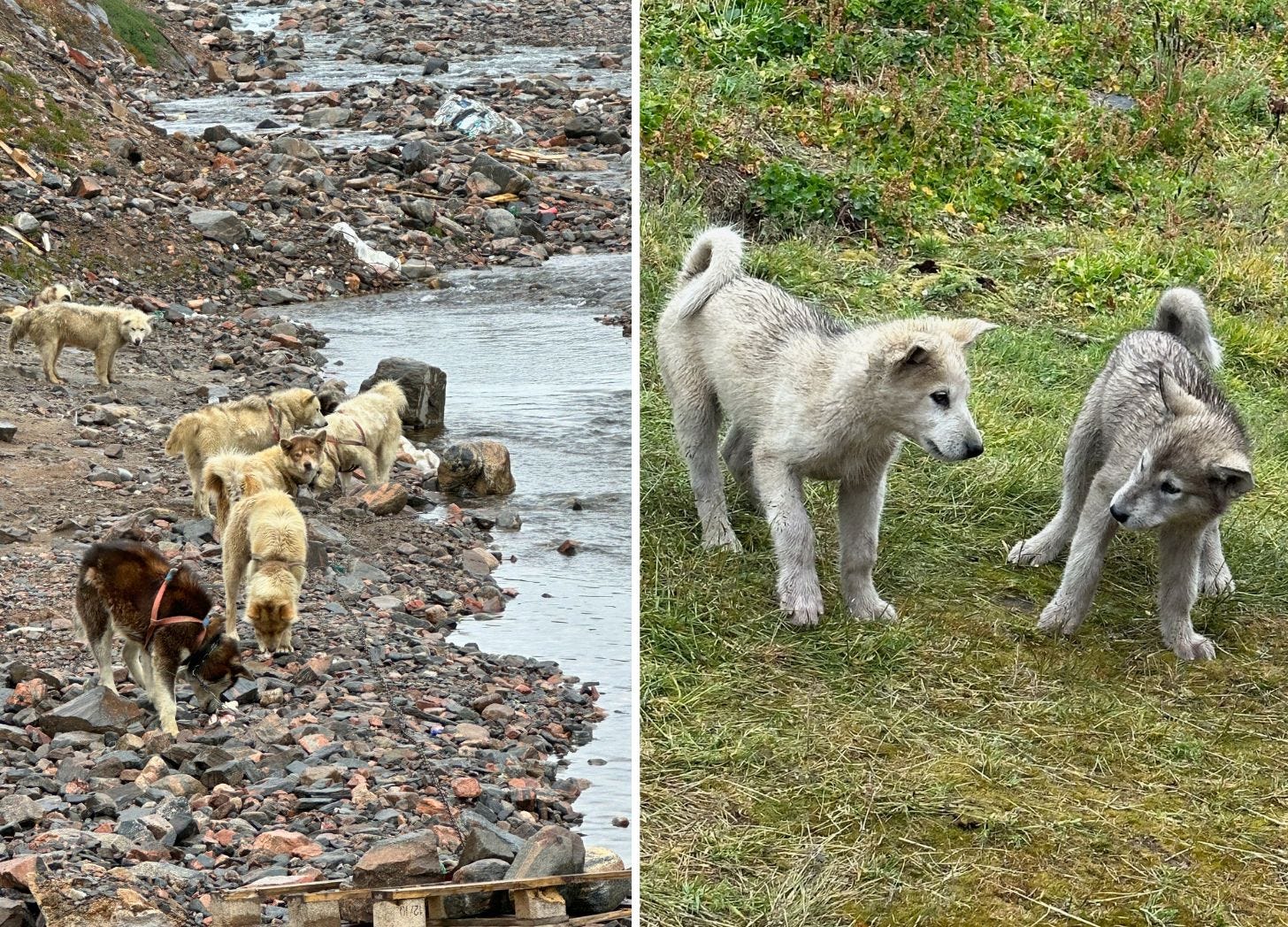
A creek ran through the middle of town, narrow in August and probably a wide river when the glaciers melt in spring. Along the bank, sled dogs were chained near silver food bowls knocked around in the dirt. Some sleeping on the cold ground. Some milling about. Empty dog sleds tipped over. Puppies running loose. Our guide told us not to pet them. If a visitor touched one, it would have to be put down. These were work animals, not furry companions. I’ve worked in animal welfare, and standing on that bridge looking down at the dogs was tough. You have to set that aside and take in the whole picture.
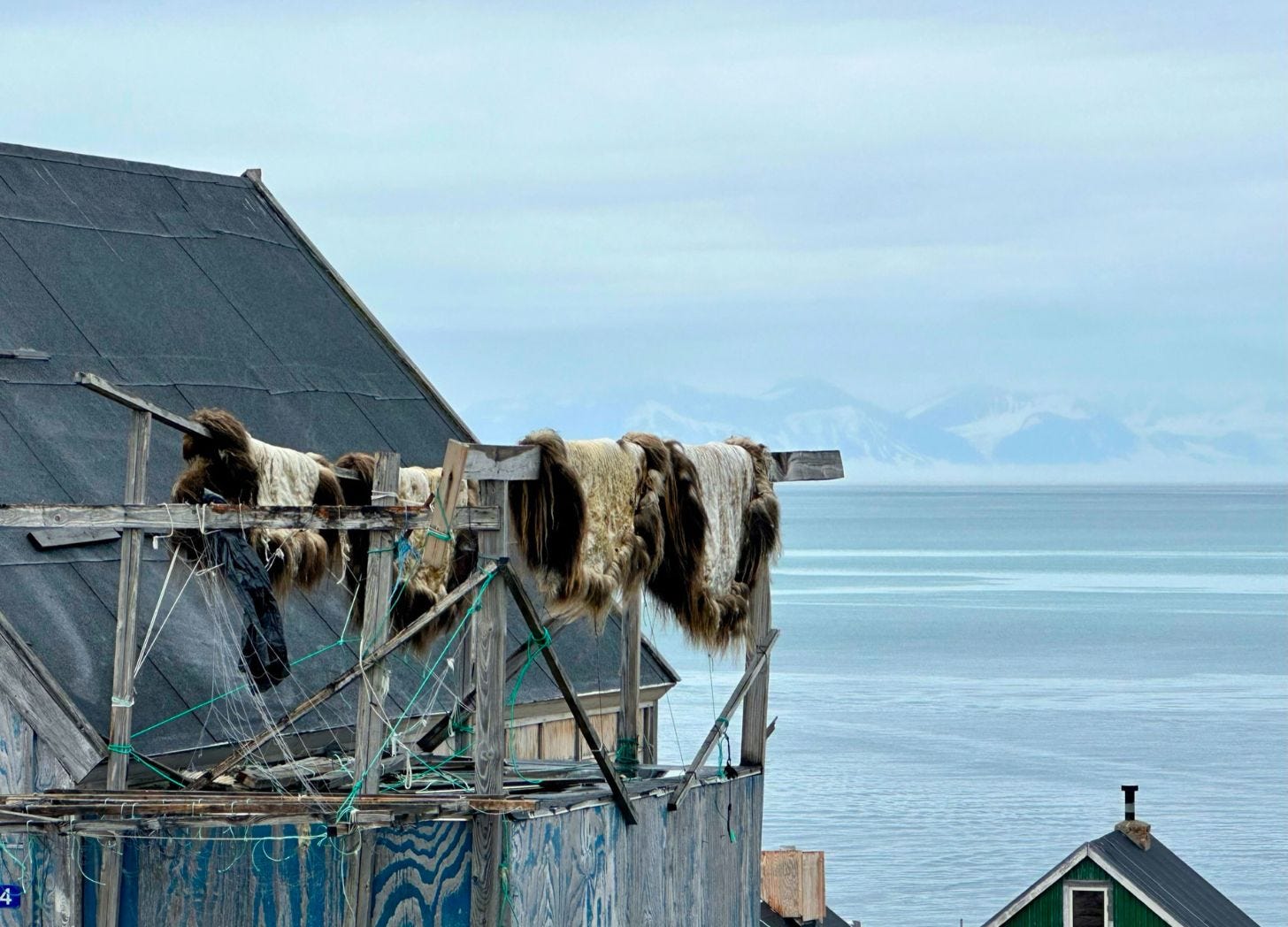
Polar bear pelts hung over wooden racks built onto the sides of houses. Some on porch railings. Whole hides, trimmed. Musk ox hides drying alongside them, shaggy and dark brown. Bear skulls mounted outside a couple of the houses. Laundry drying outside.
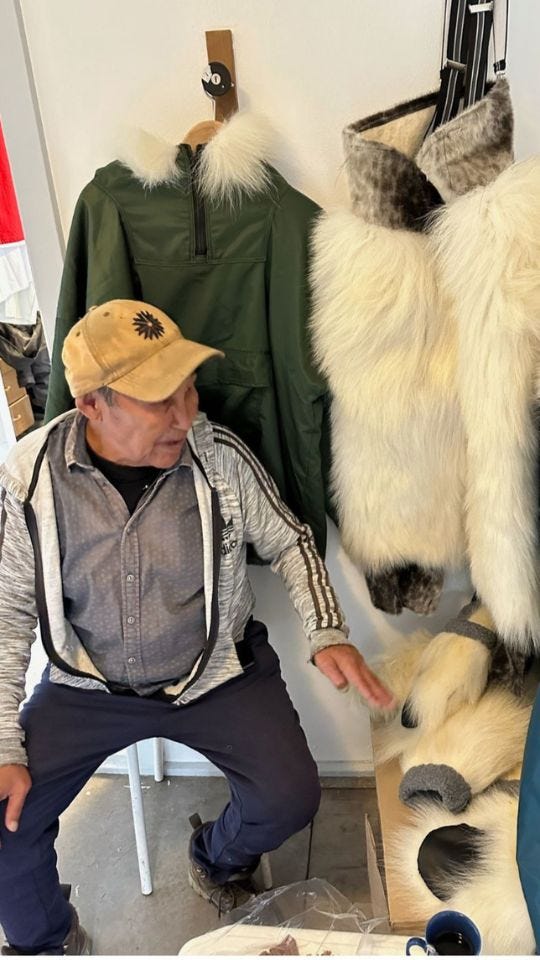
The tourist center was two rooms. There was an old man just inside the door, his face carved by the sun, weather, and time. A woman at the desk selling a few postcards, sealskin mittens, polar bear boots. Our guide said not to buy polar bear items. Customs in our home countries would most likely confiscate them. I bought a Christmas ornament made of sealskin. Small enough to pack. There were no Greenland t-shirts, no keychains, no coffee mugs. Nothing designed for the passing tourist.
Someone had to be sent to unlock the office where our passports could be stamped. The office was on a side road. Nobody was required to have their passport stamped in Ittoqqortoormiit. The stamp was our souvenir.
The grocery store sat in the middle of town. Small building, no windows, no signage, a dirt parking lot out front. It looked like a little warehouse, or a PX on a military base. The town gets deliveries twice a year. Once in July. Again in September, before the ice closes the fjord to cargo ships until the following summer. In between, the shelves go bare. Hunters go out onto the sea ice.
I didn’t go in.
I lived in a town where groceries didn’t come regularly. I already knew what sat on the shelves. Practical goods, packaged goods, some clothing and hardware. A little bit of everything. What I didn’t want was to take anything from a town that only sees shipments twice a year.
Walking back toward the Zodiac, we passed dead seals hauled up above the tide line.
Ittoqqortoormiit runs on a hodge-podge. One tour operator, a family-run business that invites visitors to stay in their home. One guesthouse, self-catering because there are no restaurants or cafés. One tourist office. One community art shop. One museum in the old Royal Greenlandic Trading store, built in 1930, though closed for renovation. That’s what the town has to offer a visitor.
Two supply ships a year. Royal Arctic Line, Greenland’s state-owned shipping company, runs the route from Denmark and West Greenland when the fjord opens in July and September. The state has been running supplies to this town since 1925, when Denmark founded it as an outpost. Food, fuel, building materials. Everything the town needs from outside arrives in those two windows. In winter, the ships stop coming altogether. In winter, the ships stop coming altogether. In between, hunters go out on the sea ice for food.
A helicopter runs twice a week from Nerlerit Inaat. The same helicopter carries residents, workers, tourists, fresh food, and mail. In winter, the helicopter doesn’t fly. Drifting snow, total darkness, weather.
Tourists come in the same weeks. Expedition ships when the ice retreats. Schooners like the Opal, small groups off the Iceland flight. A few independent travelers on the helicopter. Somewhere between five hundred and seven hundred a year, most of them arriving in the weeks the supply ships come in.
The population has been shrinking. Around 360 today, down from 539 twenty years ago and that’s counting the kids. Hunters need sea ice to hunt seals and other marine mammals. A shorter ice season means less hunting. The way this town has always fed itself is fading. Tourism is what comes next.
My pueblo in Mexico faced a similar question in 1992. The road got widened. The airport got expanded. The shipping came in through Progreso. Cancún grew from a fishing village to a city of a million. My pueblo has 2,000 people now, spread across both sides of the highway. A Pemex and a 7-Eleven. Thirty-four years.
Ittoqqortoormiit doesn’t have a road to widen. It has a helicopter that can’t fly when the weather turns, a runway thirty-seven kilometers away, and a fjord that opens for two months of the year. All three run on the same short season. Ice comes later than it used to, and the town gets a little more time. That’s the only way this town gets bigger.
When I was there in August 2023, the town’s tour operator was Nanu Travel. Two years later, Nanu Travel has gone quiet. A new family-run business, Tsigaar Naasor, has opened as the town’s only operator. Two years, one flip. That’s how thin things are here. The town is one decision away from having no tour operator.
The town’s answer is a homestay. Guests eat what the family eats, sleep where the family sleeps, live in the house. Guest and host, no middleman. Whether that works at 500 to 700 visitors a year, or whether it holds at all, is a different question.
Ittoqqortoormiit’s future isn’t decided yet. The ice keeps the town isolated. The ice keeps the hunters fed. When the ice thins, the town has to build another way to live. Tourism is what comes in when hunting falls off. It runs on a short season. That season is getting longer. Whether the summer brings more tourists or more trouble, no one knows. Not even the town.
I stayed in the road in Ittoqqortoormiit and didn’t go into the store. Twice-a-year deliveries meant the shelves were for the town, not for tourists to pick over. That I already knew from a small pueblo in Mexico thirty-four years ago, when the shelves ran near-empty from May to December and you learned not to buy what somebody else was going to need on Wednesday.
Other pieces from the road.
Maybe Tourists Aren’t the Problem

An inflatable carried us from the schooner to shore in a remote part of Greenland. We were heading for a hike toward the glacier. The landscape was covered in thick moss and small Arctic flowers growing from the rock itself.
An unlikely place to find a world record holder

Friday I went to Gorges du Verdon. Europe’s version of the Grand Canyon, although not as wide. I didn’t google it. Just a point on a map. No plan. The canyon does what canyons do. It makes you feel small. Apparently there is rafting on the river. I cannot imagine how minuscule people in a raft feel with rock walls scaling around them.
Intriguing glimpse into a life that's hard to imagine. We've been following Alluring Arctic on YouTube for years now, but Greenland is still a mystery to me.
I appreciated your thoughtfulness and respect for the community woven through this, and restraint not to take from their limited rations. Also maybe a reminder to simply observe and leave things as we found them.